There can be little doubt that ski halfpipe is one of the most physically punishing disciplines to be included in the Olympics. While other sports glide gracefully across the snow, halfpipe competitors careen between two seven-meter walls of pure ice. Landing three complete runs is a rarity, and crashing is always a scary proposition.
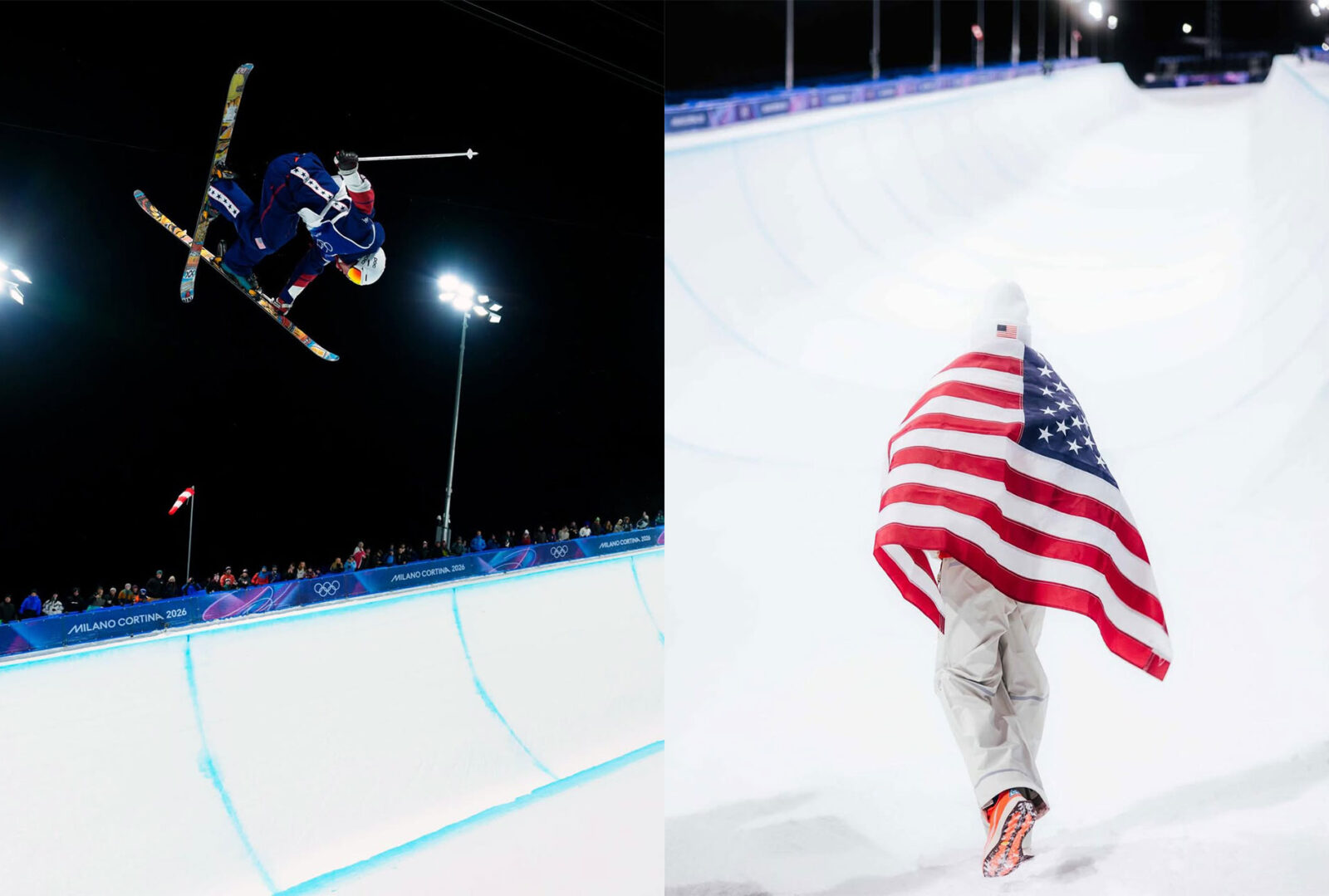
The man of the evening: Alex Ferreira.
@usskiteam
Event News
Olympic showdown
A crazy night at the 2026 Men’s Olympic halfpipe final
This much was already apparent in the qualification round, when gold-medal favorite Finley Melville Ives—fresh off a dominant win at X Games—took a brutal crash on his second run, knocking himself out and sending the medical team scrambling. Fin is reportedly okay, with a concussion and a broken collarbone, but his crash sent a shock wave through the contest. It was an unexpected early exit for the clear favorite—and the opening of a window of opportunity for the rest of the field.
Run 1: A slow start
The first run was a festival of crashes, with only Ben Harrington and Andrew Longino able to land full runs. Besides them, nine crashes and a DNS. Harrington kicked things off with a clean run but only two doubles to score in the low 60s, while Longino unpacked a pair of whirlwind switch 1260s and finished off with a left double cork 1620 to lurch into the lead with a 76.50.
Among the crashes, the most unfortunate came from Hunter Hess, who stomped a monster of a run—switch left double 900 safety, switch right double 1080 mute, left double cork 1620, right double 12 reverse mute—before uncharacteristically crashing on his signature last-hit misty 540 on the right wall.
Nerves were certainly in play, but the halfpipe also appeared to have an uneven cut, with an over-vert left wall that dropped quickly into the flats and a shallower, less vert right wall. This incongruence seemed to account for many of the crashes. Halfpipe is, after all, a sport where a few centimeters can make the difference between a make and a slam. A shame, considering the crashes that might have been avoided in a pipe with a better cut.
Run 2: Getting warmer
The temperature increased significantly in the second run, with five riders landing clean runs as the struggle for the podium began to take shape. The first challenge came from Gus Kenworthy, who put down three doubles and stomped his last-hit alley-oop dub flat 9 japan definitively—but didn’t spin over 12, and kept his switch left hit to a 720. Score: 84.75 and the provisional lead. The next to step up was American Birk Irving, who laced his signature left double 1440 flawlessly and finished with a dub flat 9 japan of his own to jump ahead of Gus with an 87.50.
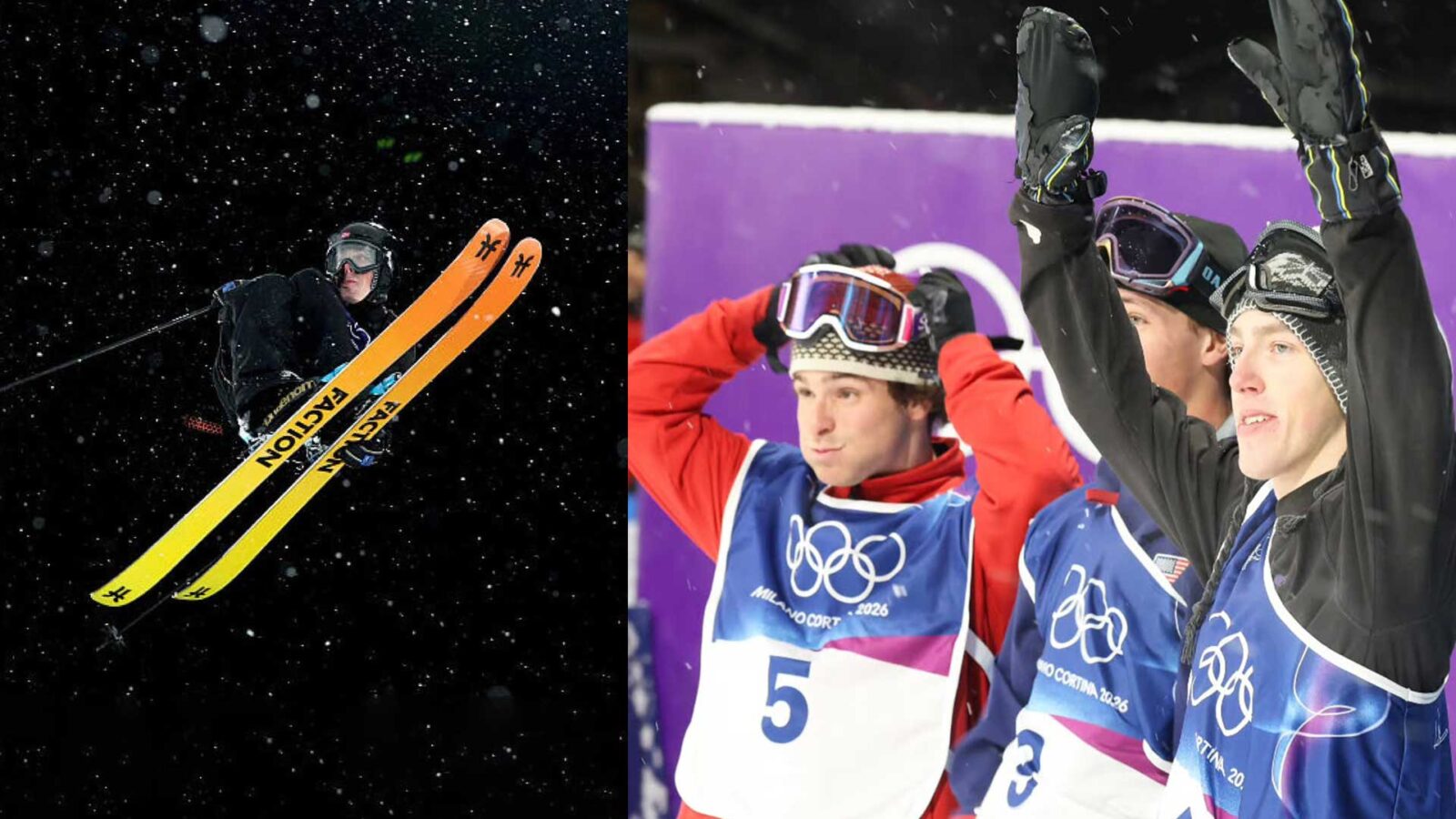
After another unfortunate crash from Hunter Hess, the four top qualifiers came out blasting. Alex Ferreira was the first into the 90s with doubles in all four directions: two switch dub 10s and two forward dub 16s. He was promptly and surprisingly overtaken by dark-horse competitor Henry Sildaru, who put down the run of a lifetime—switch right 12 cuban, switch left 10 blunt, right dub 16 japan, left dub 16 blunt, left alley-oop 10 blunt—to surge into the lead with a 92.75. He didn’t put up switch doubles, but his flawless grabs and stone-cold execution—not to mention back to back 16s—more than made up for it.
Finishing out the round, Nick Goepper rode into provisional third place with a run that dialed down the amplitude on his final hit, and everyone dodged a bullet when top qualifier Brendan Mackay, going absolutely massive—over 5 meters out—on his first hit switch alley-oop dub 9, missed the grab on his second dub 16 and was penalized harshly for it. Mackay’s run is huge, but lacks a switch right hit, which he has to make up for with amplitude and execution.
Related Content
Run 3: Podium scramble
The third and final run opened with a leaderboard no one was expecting: Henry Sildaru at the top, trailed by Alex Ferreira, Nick Goepper and Birk Irving.
There is simply something special about the last run of a night final at a major contest. Under the lights and in front of the crowd, years of anticipation and preparation are compressed into one electric moment—one last chance for a would-be hero to pour his hopes into the pipe and emerge a champion.
Dropping first, Ben Harrington was able to improve his score from his first run slightly, but not his standing. Benjamin Lynch—undoubtedly the first to represent Ireland in an Olympic freeski final—put down the run of his life with memorably fluid style, but without the technicality of the top of the field. He was rewarded with a score of 75, slipping past Harrington into seventh place.
Sitting in fifth place, Gus Kenworthy’s podium bid was stymied by a back-heavy landing on a right double 1440 mute attempt. Though he didn’t crack the podium, it was an impressive finish for the four-time Olympian—two slopestyle, two halfpipe—and an improvement on his 8th-place showing at Beijing 2022.
On his first run, Dylan Marineau landed an insane new trick in the pipe—a double 12 set as a flat 5 into a cork 7—but couldn’t finish his run. He spent his next two runs trying and failing to replicate that feat, but still had a grand old time on the Olympic stage, jumping up on the deck to high-five spectators and busting out what must be the single best trick of the night, a spread eagle with a double pole pass through the legs. Perfection.
Hovering in the middle of the pack, Andrew Longino looked to improve on his first-run score of 76.50. He probably would have, too, if it weren’t for his binding breaking on his last-hit double 16. Lingering at everyone’s least favorite place—fourth, just off the podium—Birk Irving put down his run clean a second time, and held his last-hit alley-oop double flat to a stylish 720 instead of the more conventional 900. His score improved slightly, but not his place.
Needing a run after two crashes, Hunter Hess finally held it together from top to bottom on a face-saving final try. But he whiffed the grabs on his left dub 16 to right dub 12 combo. It got him out of the crash scores, but not by much—a disappointing result for a rider that many had among their podium picks.
Coming into this final, Alex Ferreira was a favorite, but not an easy one. Unbeatable in the pipe just two years ago, Alex had watched the rest of the field rise to the bar he had set with his back to back 16s. Sitting in second behind Henry Sildaru, he needed to do something special to take over the lead—and he did, lacing his run clean with all four doubles, two 16s and stepping up his right cork 7 to a stylish double 10. Taking their time with the score, the judges weighed Ferreira’s amplitude and technicality against Sildaru’s flawless grabs and execution, the scales tipped towards Ferreira: 93.75 and into the lead.
Henry Sildaru was up next. With one last shot at a dark-horse victory, the young Estonian stomped his run even cleaner than before. His seemingly supernatural ability to cap blunt (magnets???) was on full display as he stomped perhaps the most flawless double cork 1620 blunt ever done. His grab game and execution was insanely on point, he stepped up his switch left 10 to switch 14, and his 16s were even better than Ferreira’s. But crucially, he lacked in amplitude—the biggest factor that kept his gold-medal ambitions in check. His score improved, but not enough to reclaim gold.
Already an epic final showdown, and the two top qualifiers still to drop: Nick Goepper and Brendan Mackay. Never one to hold back when Olympic medals are on the line, Goepper tried an alley-oop switch double misty on his last hit, but got absolutely bodied, bouncing off the deck and into the flats. It was a show-stopper of a crash, and the crowd roared when Nick got back on his feet, proclaiming, “I regret nothing!” Legend.
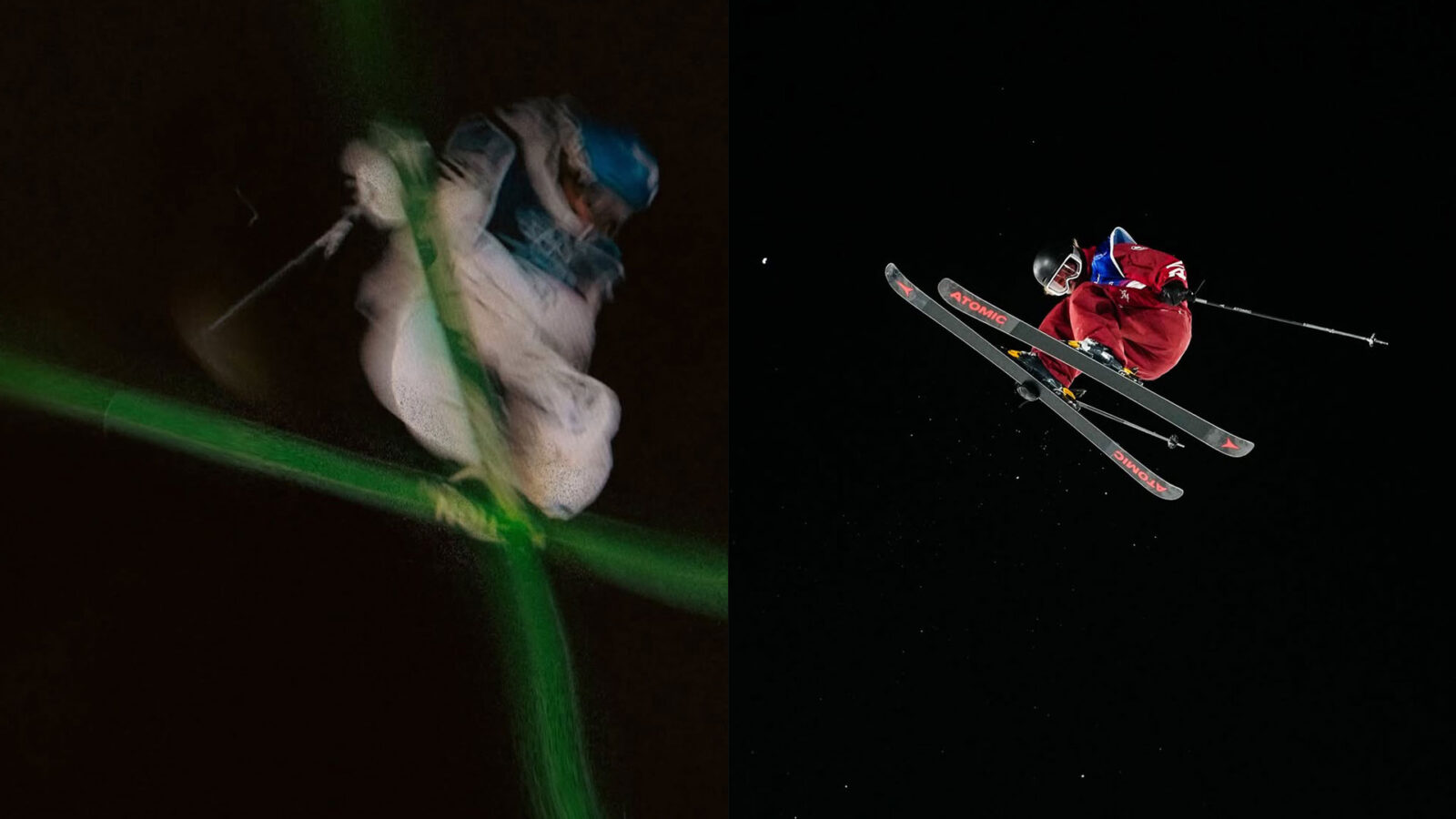
Down in tenth place with a 53, Brendan Mackay didn’t waste his final chance. The top qualifier finally delivered his run of two massive switch doubles, including an absolutely filthy switch alley-oop double cork 900 on the first hit, with a critical grab clinched until milliseconds before landing—and two double 1620 safeties. It was enough for a score of 91 and a bronze medal for the Canadian.
It wasn’t always pretty, and it definitely wasn’t perfect. But at the end of the day, the Olympic halfpipe final—and most of all, the competitors in it—managed to yet again deliver with a memorable performance worthy of the sport’s biggest stage.
2026 Milano-Cortina Winter Olympics | Men's Freeski Halfpipe Final
| Place | Name | Country | Score |
|---|---|---|---|
| 1st | Alex Ferreira | USA | 93.75 |
| 2nd | Henry Sildaru | EST | 93.00 |
| 3rd | Brendan Mackay | CAN | 91.00 |
| 4th | Nick Goepper | USA | 89.00 |
| 5th | Birk Irving | USA | 88.00 |
| 6th | Gus Kenworthy | GBR | 84.75 |
| 7th | Andrew Longino | CAN | 76.50 |
| 8th | Benjamin Lynch | IRL | 75.00 |
| 9th | Ben Harrington | NZL | 73.75 |
| 10th | Hunter Hess | USA | 58.75 |
| 11th | Dylan Marineau | CAN | 22.50 |
| 12th | Lee Seunghun | KOR | DNS |
All results on fis-ski.com