The Snow League gives halfpipe riders the chance to win a huge stack of cash. But it makes them work hard for it. The advantages and challenges of the format were on full display at the league finals this weekend in Laax, Switzerland.
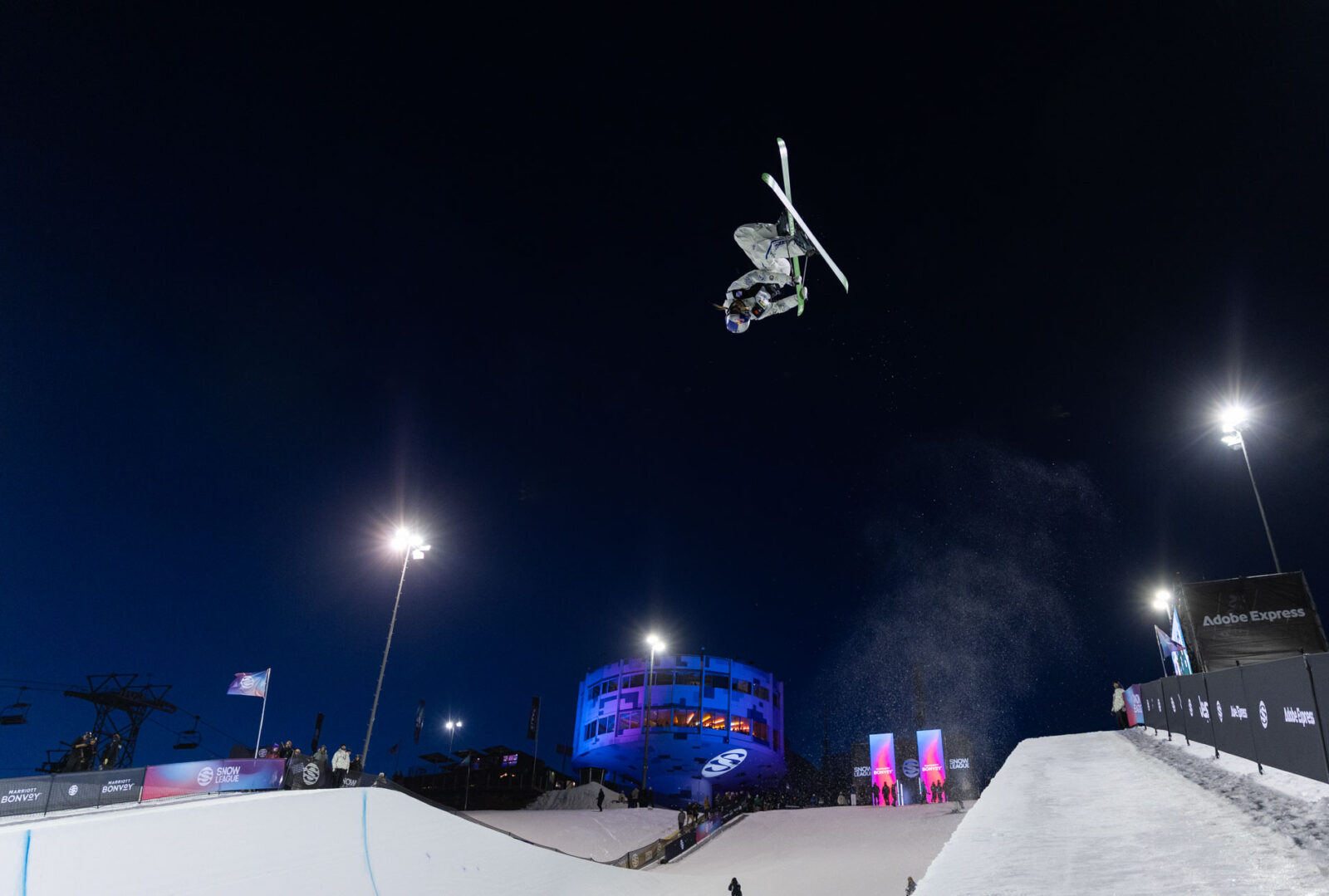
Eileen Gu: Don't take her hard work for granted.
Ethan Stone
Event News
will ride pipe for $$$
The Snow League Laax: Survival of the fittest
I’ll be honest—I came to Laax fully prepared to be disappointed in the Snow League. Since its inception last spring, skiing and snowboarding’s new halfpipe circuit never quite rubbed me the right way, for a variety of reasons.
Perhaps it was the bold claim to be “the future of winter sports competition.” Maybe it was the stop-and-start nature of the initial rollout: four events spread across two winters, with skiing present at just two of them. Perhaps it was the outrageous array of big-money sponsors, from luxury brands to tech giants, hopping on the bandwagon in a capitalist dogpile. Or maybe it’s just Shaun White, who is the founder of the Snow League, and wants to make sure that you know that.
Nevertheless, watching the final event of the first season, the grand finale in Laax, won me over—convincing me that, once you get past all the above-mentioned topics, Snow League has something valuable to bring to the world of snow sports.
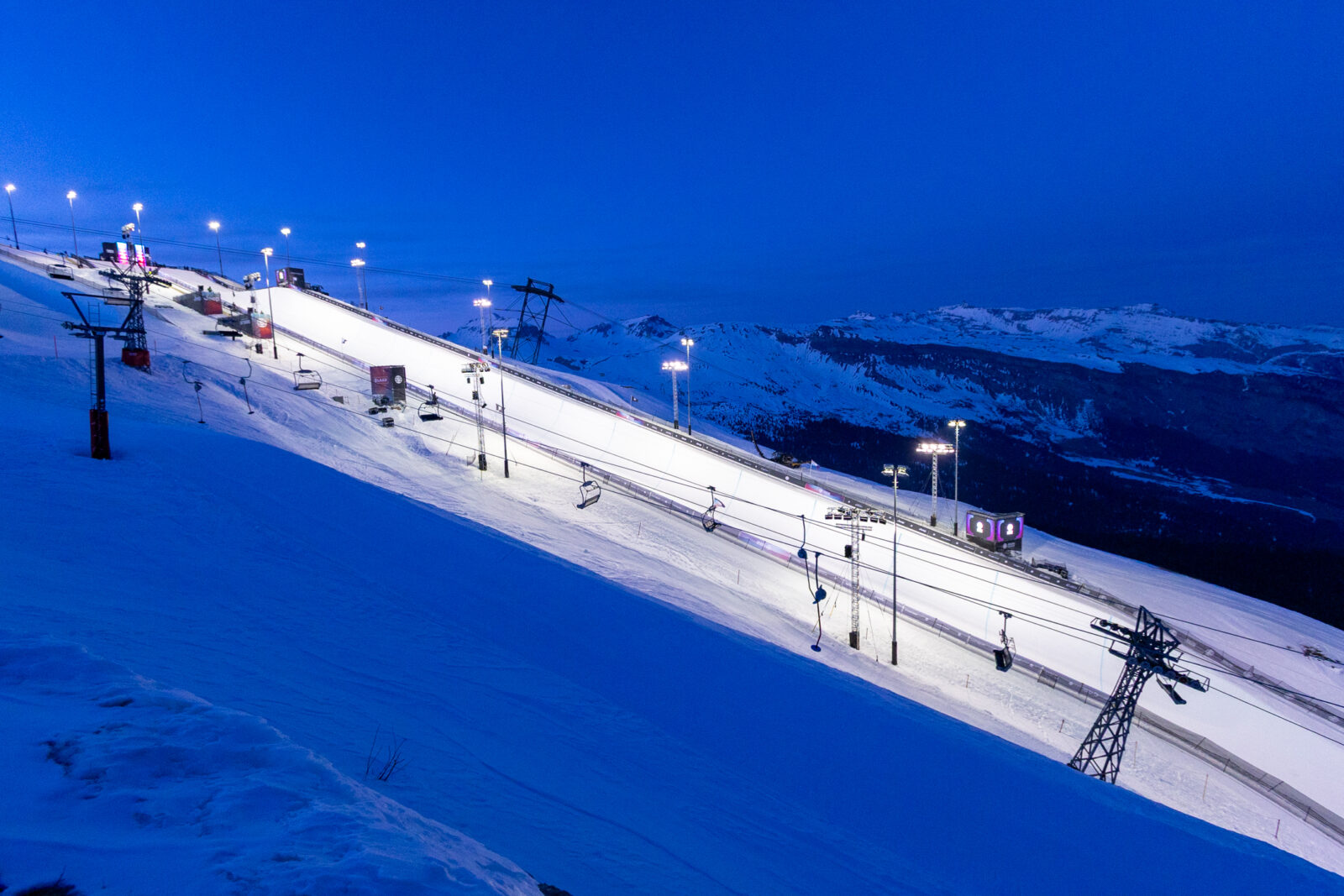
Arguably the best halfpipe in the world: The Noname pipe at Laax.
Ethan Stone
Eileen Gu and Luke Harrold win Laax, and the overall titles
Eileen Gu, to absolutely nobody’s surprise, won the women’s contest in Laax, as well as the overall Snow League title. She claimed a Stanley Cup-sized trophy from Tiffany, The Exclusive Trophy Sponsor Of The Snow League, as well as the $50,000 USD prize for first place.
At this point it’s easy to take Eileen’s success for granted—but as she often points out in interviews, we probably shouldn’t. She’s the hardest-working woman in halfpipe skiing, as was clear in Laax: the first to drop in during training, the first to put down her full run during training, getting more laps than any other competitor. Yes, Eileen is incredibly naturally gifted, and in competition she makes winning look effortless—but that’s only because of all of the hard work she’s put in beforehand.
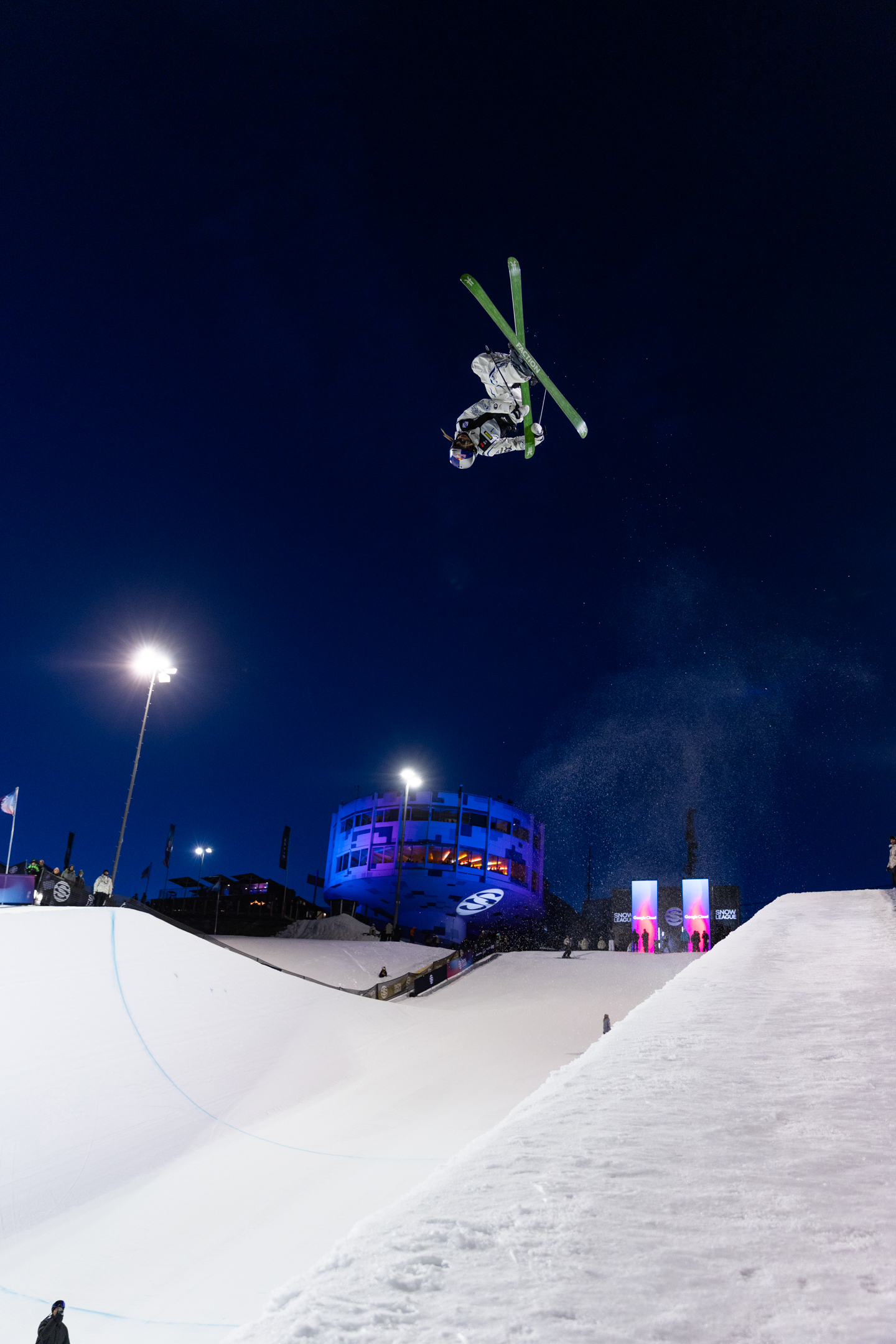
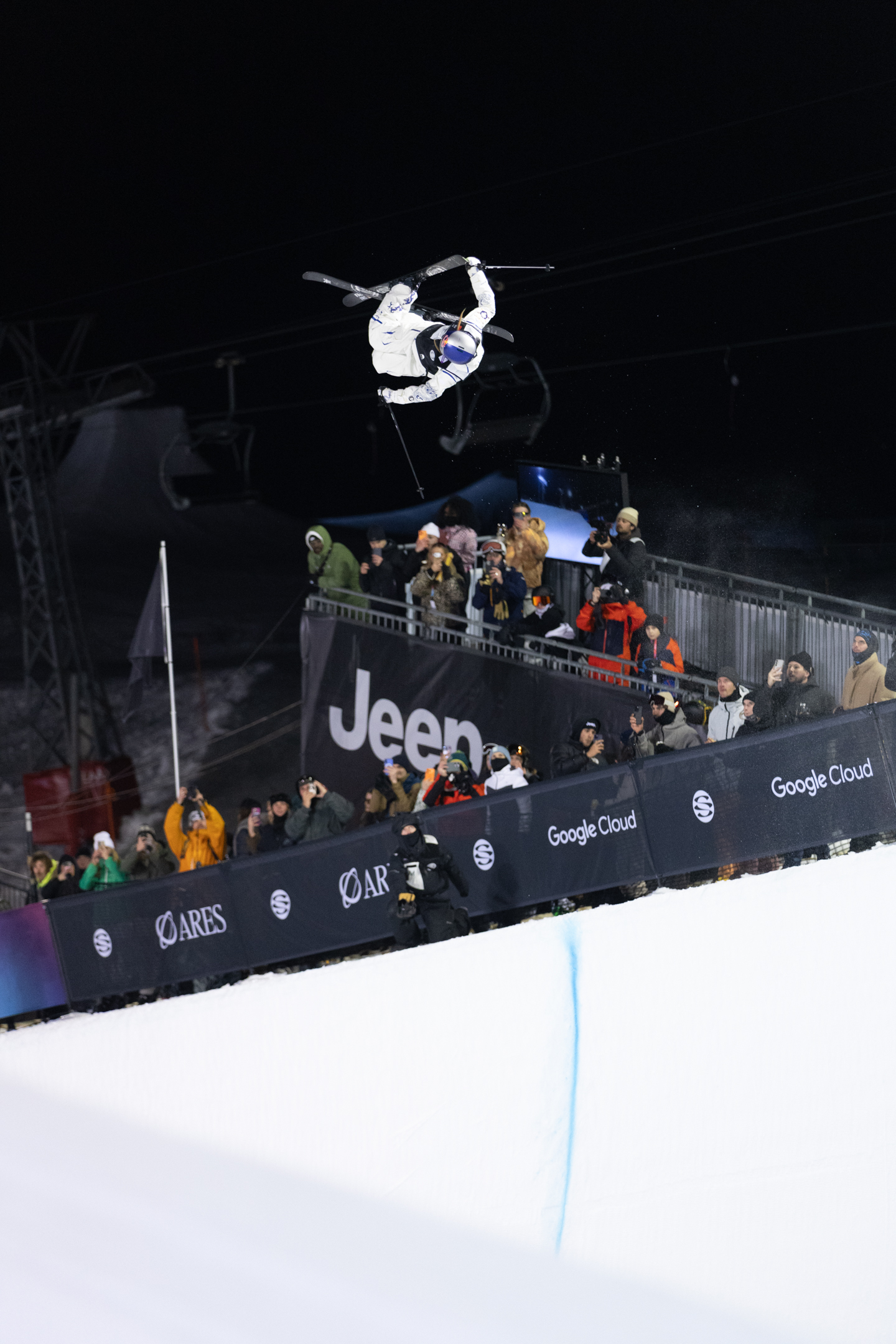
The Snow League’s head-to-head bracket format ended up pitting Eileen against Zoe Atkin—the likely second-place finisher—in the semifinals, relegating Zoe to the small final where she beat out rookie Mischa Thomas for third place. This set of circumstances launched Canadian halfpipe veteran Amy Fraser into the spotlight for a finals showdown with Eileen, and a well-rewarded ($20,000 USD) second place finish.
Long day, crazy format. It’s way more stressful, but I really like the format. It’s a lot more strategy. I think its cool to play the other person and not just show up at a contest and put down a run.
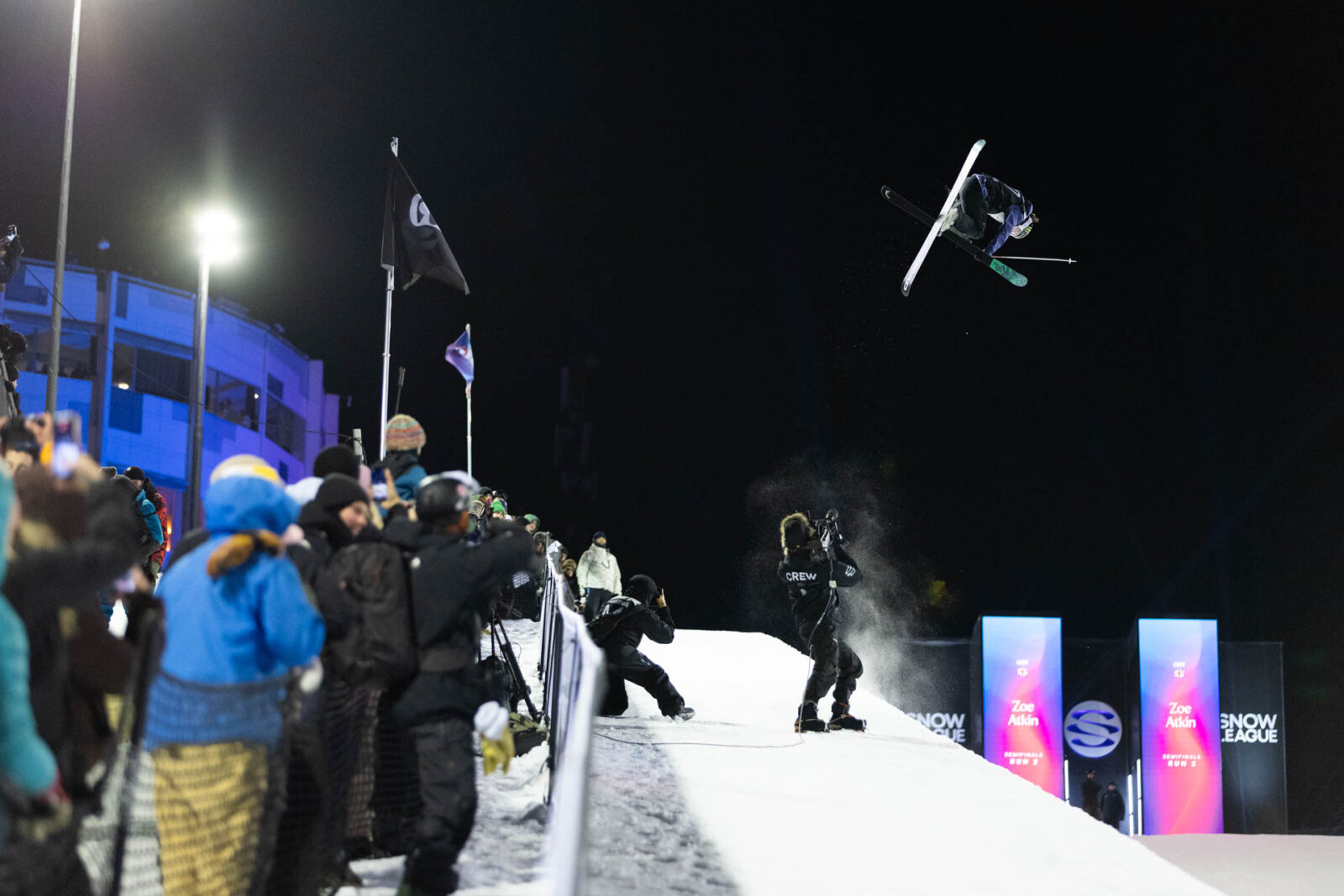
Zoe Atkin could have been second place, but that's a head-to-head format for you.
Ethan Stone
On the men’s side, the head-to-head format produced an extremely unique semi-finals lineup. The oldest competitor in the field, David Wise, faced off against the youngest, Luke Harrold, while Hunter Hess and Brendan Mackay filled the other bracket.
Both semifinals face-offs went to three runs, as did both the finals and small finals—meaning each of these riders had to put down six contest runs in the space of one evening. Somehow, they did, arriving at the bottom of the pipe a bit more tired and beaten up after each run. When the snow settled, it was the fresh legs of Luke Harrold that held out the longest, netting the young Kiwi his biggest contest victory to date.
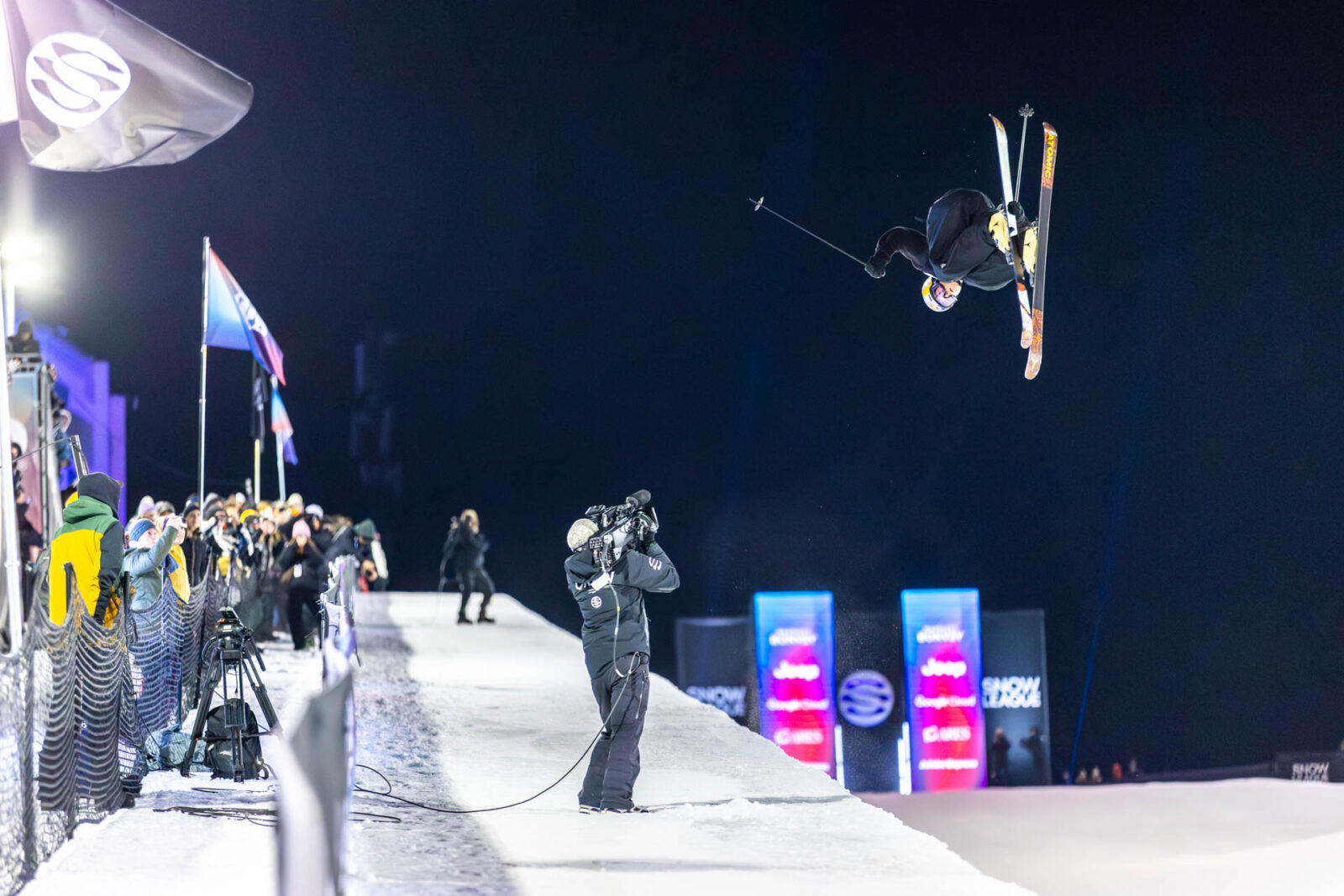
In a battle of endurance, it's good to have young legs.
Ethan Stone
It's been a really long day. I’m pretty excited to go to bed tonight. This format definitely takes a lot. It's really survival of the fittest, and a bit of strategy in there also helps.
Brendan Mackay took second in Laax and in the overall, while Hunter Hess prevailed over David Wise in the small final for third place.
The format: Survival of the fittest
Both the advantages of and disadvantages of the Snow League format were on full display in Laax.
The format is as follows: head-to-head match-ups with a best-of-three structure. Whichever rider wins two runs first, advances to the next round. Riders have to drop in once on the left wall and once on the right wall, meaning they need to put down two different runs to win.
On the one hand, this lends an entirely new vibe to halfpipe competition. Instead of eight or twelve riders piling into a final, there a number of unique head-to-head match-ups where anything can happen. This is intended to provide a new dramatic aspect to the competition, and no doubt: it works. It’s great to see riders needing to put down two distinct runs—a very fresh look, considering we usually see the exact same runs from riders throughout a season of competition.
But there’s also downsides to the format. When the battles go to three runs, the riders have to head back up to the top to drop in again immediately, causing delays and lowering the rider’s stamina. When multiple head-to-head battles go to three runs, the event can begin to run long, as it did on Friday in Laax. Towards the end, everyone from the competitors to spectators was more than ready to call it a night.
It’s also a huge challenge for rides to put down run after run all day long—up to nine contest runs in a day, if every battle goes to three runs. While the head-to-heads pushes riders to out-perform their opponent, it doesn’t necessarily end up delivering the best possible halfpipe runs. In the case of the finals in Laax, it was less about showcasing the day’s best halfpipe runs, and more about who had the endurance and stamina to keep serving up runs until the end. At the end of the finals, all of the competitors seemed close to collapse.
There are things to love, and things not to love about the Snow League. On the face of it, the league seems overly capitalized, with everyone from Google to Adobe to Jeep to Tiffany to ARES (what is ARES, anyway?) lining up to plaster their names on the sponsor boards. Yet, all of these sponsor dollars are flowing into the industry: to riggers, shapers, camera operators, editors, producers, announcers, and most of all to athletes. The huge prize purses that Snow League has brought to the table (a total of $2.2 million in the first season) is probably the biggest benefit of the league—injecting the kind of cash that can make halfpipe riding a career instead of an expensive hobby.
“Its giving skiers the ability to be on the main stage in the focal point and to get paid, which we need bad,” said Hunter Hess. “I kind of realized today how much money we were actually getting paid, and I was blown away. Its so awesome and makes this more of a sustainable career path. Everyone here deserves it- we all work so hard, we dedicated our minds, our bodies, all of our time and energy throughout the season, so we all deserve to get some money, and I’m pretty hyped they gave us this opportunity.”