Great conditions awaited the world’s best freeriders at the second stop of the 2026 Freeride World Tour, the Val Thorens Pro. Ben Richards from New Zealand managed to repeat his outstanding performance from Spain a good week ago, claiming his second win on the FWT this season in as many events. Rookie Joey Leonardo and veteran Ross Tester, both from the USA, joined him on the podium. Meanwhile Agostina Vietti took the top spot in the Ski Women’s category in only her second start on the tour, writing history as the first Argentinian woman to claim a FWT victory. Switzerland’s Sybille Blanjean as second proved she’s back to form following a long absence due to injury while third place went to another tour rookie, American Wynter McBride.
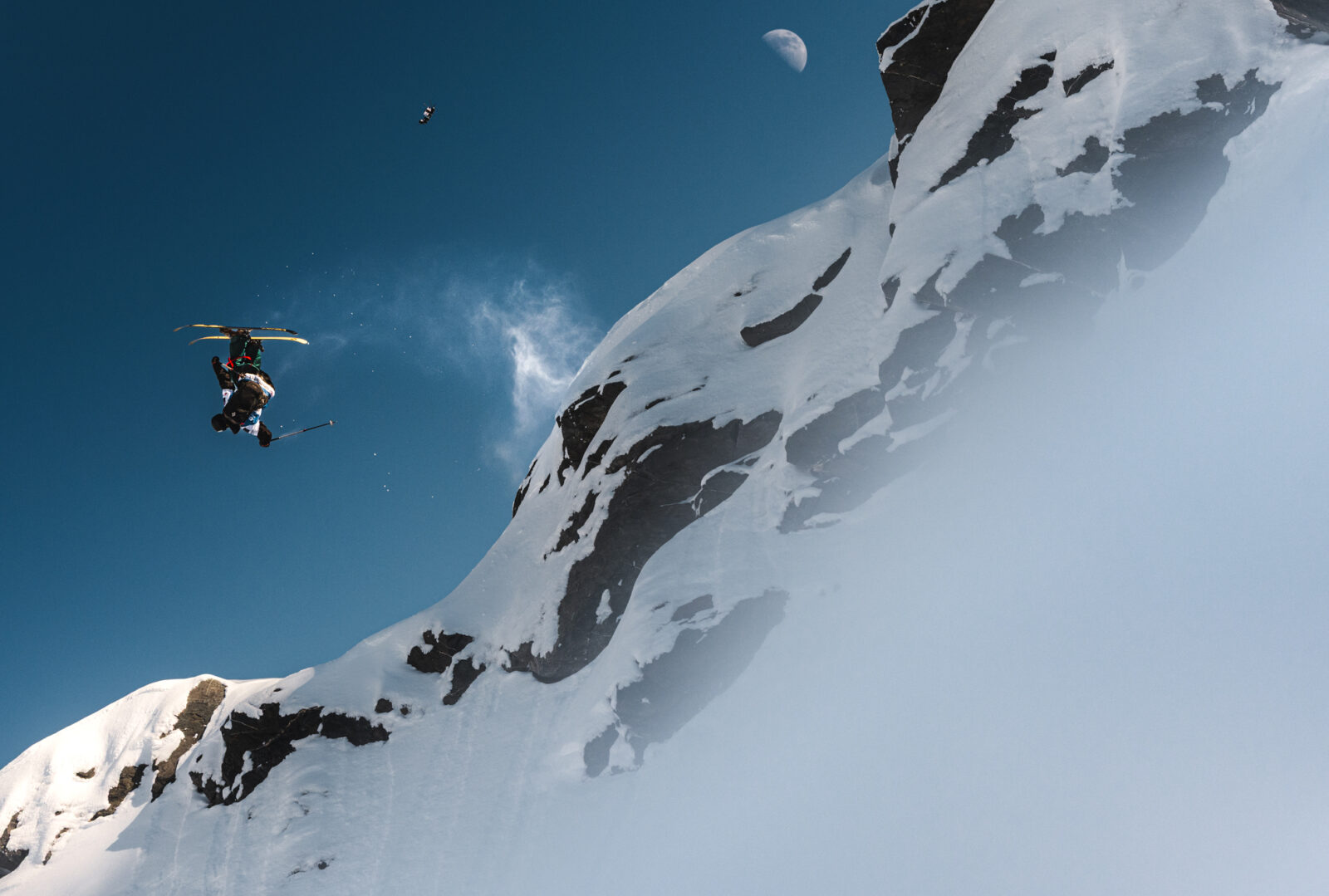
Fynn Powell throws down at the Pointe de Thorens.
Jeremy Bernard / FWT
Event News
HighlightThe kiwi strikes again
Powder, hucks, crashes and really good riding at the Val Thorens Pro
Val Thorens, one of France’s premium ski resorts, hosted the second stop of this year’s Freeride World Tour on Monday. It was the second time the FWT paid a visit to the top of the Trois Vallées ski area—a detail of special interest since Val Thorens would likely host the Olympic premiere of freeriding should the sport become an Olympic discipline by 2030. However, similarly to last season, the competition wasn’t held at the provisional Olympic venue at the resort’s highest lift-served peak, the 3,193 m high Cime de Caron. Instead, conditions prompted the organizers to move a little bit east to the 3,262 m high Pointe de Thorens, a peak that is surrounded by lifts but has to be hiked in order to drop in near the actual top.
The organizer’s choice proved to be reasonable with a nice blanket of fresh powder on the venue, not too many hidden rocks—although a few riders fell victim to sharks—and quite a varied selection of terrain features to choose from. The only downside was a long traverse that connected a steep top section with an equally steep bottom section. In fact, this division of the face into two stages with clear runouts on both and the chance to recover in-between prompted the vast majority of male skiers to opt for high-risk tricks over big drops. The consequence was crashes for almost two thirds of the participants.
The continuation of this trend towards Big Mountain Slopestyle which was already present at the first tour stop in Spain might need some attention from the FWT organization. First of all, a competition with more than half of the participants crashing won’t make the best impression towards a mainstream audience. I can’t imagine a contest like this year’s Val Thorens Pro helping the case of freeriding becoming an Olympic discipline. Secondly, the exaggerated—at least in my opinion—value of tricks in the overall score results in mostly similar runs, since creative line choice and technical lines don’t allow for top results if tricks can’t be included due to the shape of potential takeoffs or landings. For example, when you look at the image of the venue to the right, you can immediately see that Max Hitzig’s line at the top of the venue was truly outstanding. Despite Max skiing his line super fast and without even the slightest trouble, he ended in fourth place since he chose a similar approach in the second part of the face and therefore ended his run without a freestyle trick.
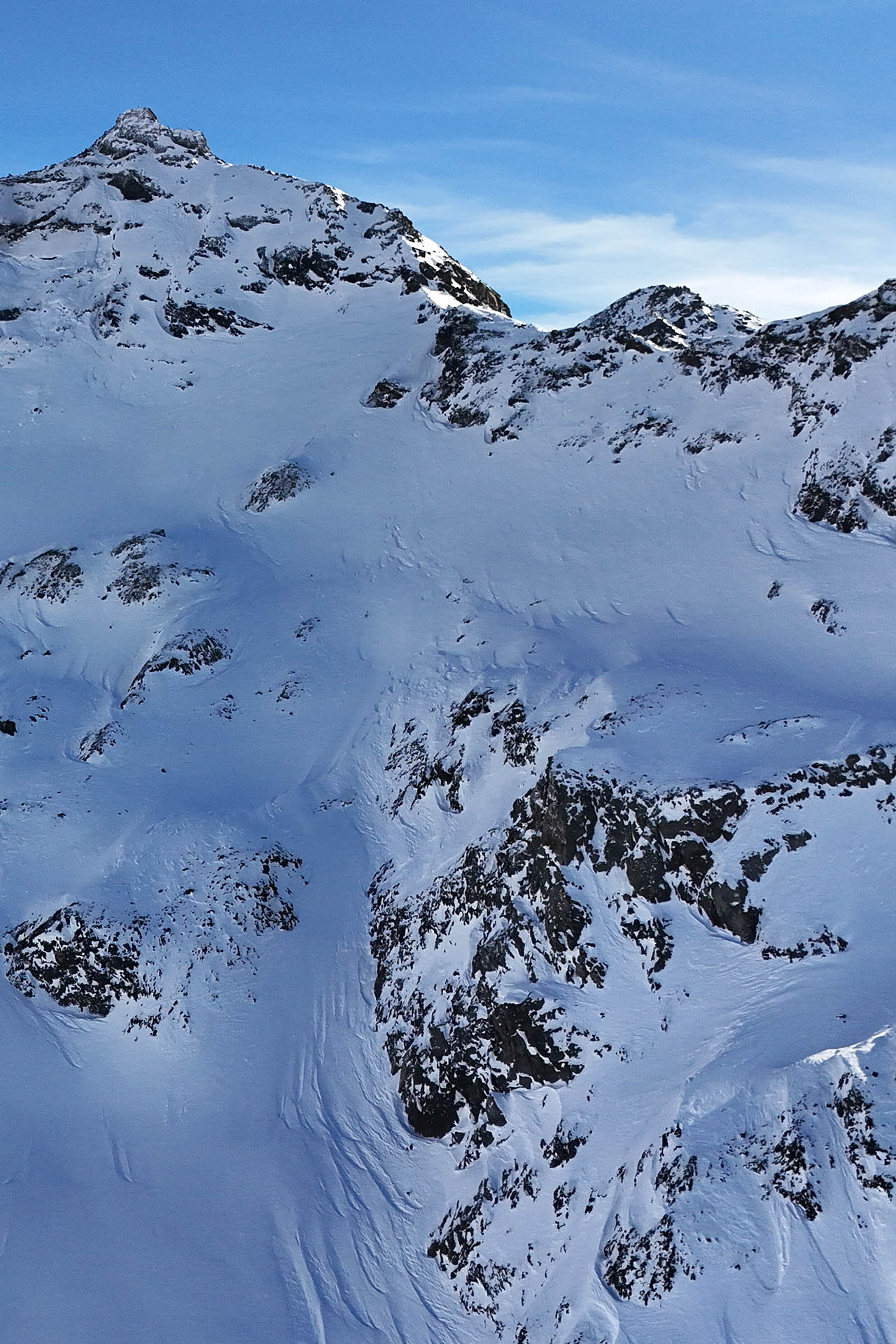
The venue of the Val Thorens Pro at the Pointe de Thorens (top left) in aerial view before the event. The start gate would be at the ridge just right of the highest peak. Skiers would either go straight down or traverse to looker’s right towards the obvious shoulder and then drop into the section with several smaller cliffs. Max Hitzig would clear the big cliff just between the other two options. Riders would then traverse to looker’s right and enter the bottom section at the obvious cliff band just below the middle of the image and ski the final steep section to looker’s left.
Freeride World Tour
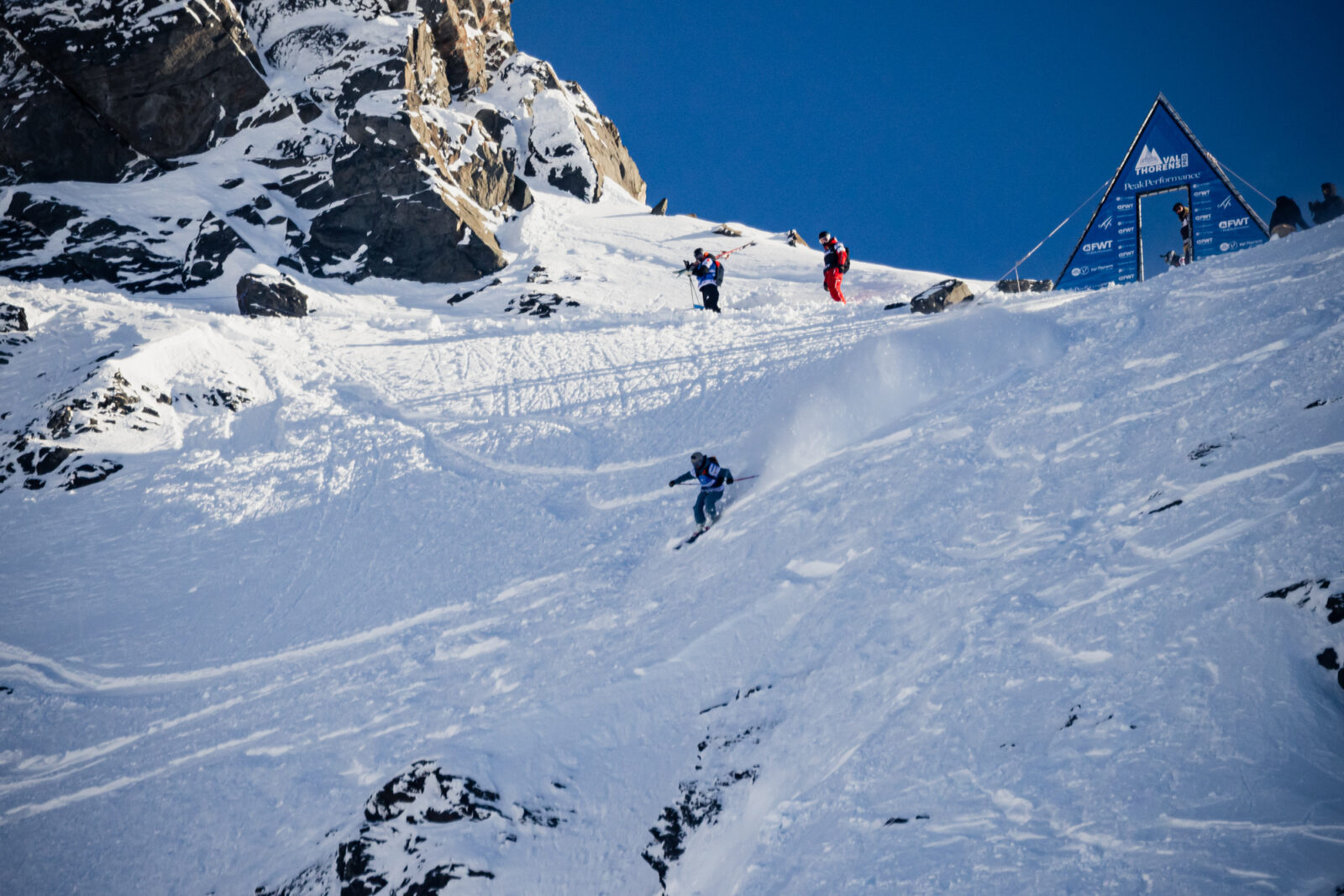
Agostina Vietti drops into her run with determination.
Dom Daher / FWT
The Ski Women’s competition, which ended a long day in Val Thorens and had some of the last skiers cope with growing and increasingly dark shadows, had a better rate of riders making it to the finish line without a crash compared to the Ski Men’s, but it still saw a few remarkable entries at the bottom of the result list. Astrid Cheylus, one of last season’s FWT protagonists, lost her skis right at the beginning of her run when she hit a rock covered under the fresh snow. With a second low-scoring result in a row, she will have to fight in order to make the cut this year. The same goes for Molly Armanino, who chose a bold line with unquestionably the biggest drop of any female competitor but couldn’t quite hold it together at the landing. Meanwhile Justine Dufour-Lapointe, the winner of the first tour stop in Spain, completely misjudged the takeoff at a transfer air and crashed trying to pull off a backflip—her signature trick—on a jump that simply didn’t give her enough ground clearance.
In the end, the podium was conquered by three women skiing quite similar lines with a handful of straight drops both at the top and the bottom part of the venue and strong skiing in rather open sections of the face. Agostina Vietti, the tour rookie from Argentina, simply showed the most determination and pace while keeping it clean, earning her the first victory on the Freeride World Tour stage—also meaning the first victory for an Argentinian women in the tour’s history. Sybille Blanjean, who had missed the entire 2025 season due to injury, proved she fully trusts her ability to perform again following a slightly careful start into the tour in Spain. Her pace and straight-forward approach in line choice with several cliffs fully deserved her second place finish, although Wynter McBride was close on her heels with a similar approach. Arguably the most powerful run of the day came from Polish tour veteran Zuzanna Witych, but a back-slap landing at a sizable drop kept her just off the podium.
“My run felt amazing. I did exactly what I wanted to do. I skipped a few features, but the plan worked perfectly and I’m really stoked. I wasn’t as stressed as I used to be at the start gate; I’m learning to manage that energy better. I’ve realized that nerves can actually be a source of strength, and they really help me perform.”
In the Ski Men’s category, crashes were undoubtedly the story of the day. Out of 22 starters, seven finished with a No Score result following a loss of equipment. Seven more crashed but still got a score since they were lucky enough to not drop a ski. Fortunately, nobody got hurt which is a testament to both the physical strength of all FWT athletes and generally reasonable line choice avoiding obvious hazards—but the tough competition and prevalent judging standards set the threshold of acceptable risk for not landing a trick rather high among a field with more and more skiers opting to trick cliff drops despite difficult takeoffs and/or landings. The clean straight air almost becomes a rarity except on the highest cliffs and the most technical takeoffs.
From the eight skiers finishing their run without a clear crash, Ugo Troubat earned the lowest score based on the fact that he didn’t include a trick into an otherwise strong performance albeit on a rather standard line choice. Abel Moga finished one rank above opting for a unique line in which he frontflipped a roller following a “standard” top section—of course including a 360 drop and quadruple drop over smaller features—, but his line choice simply offered substantially less technical terrain than everybody else’s. Tour rookie Victor Hale-Woods got redemption following a crash in Spain with a solid run including a massive yet clean 360 over a double cliff up top for sixth place, while Tiemo Rolshoven, who had missed the first tour stop due to his final university exams, returned with a strong effort for fifth showing super fast skiing including two double drops plus two backflips, albeit with two backseat landings.
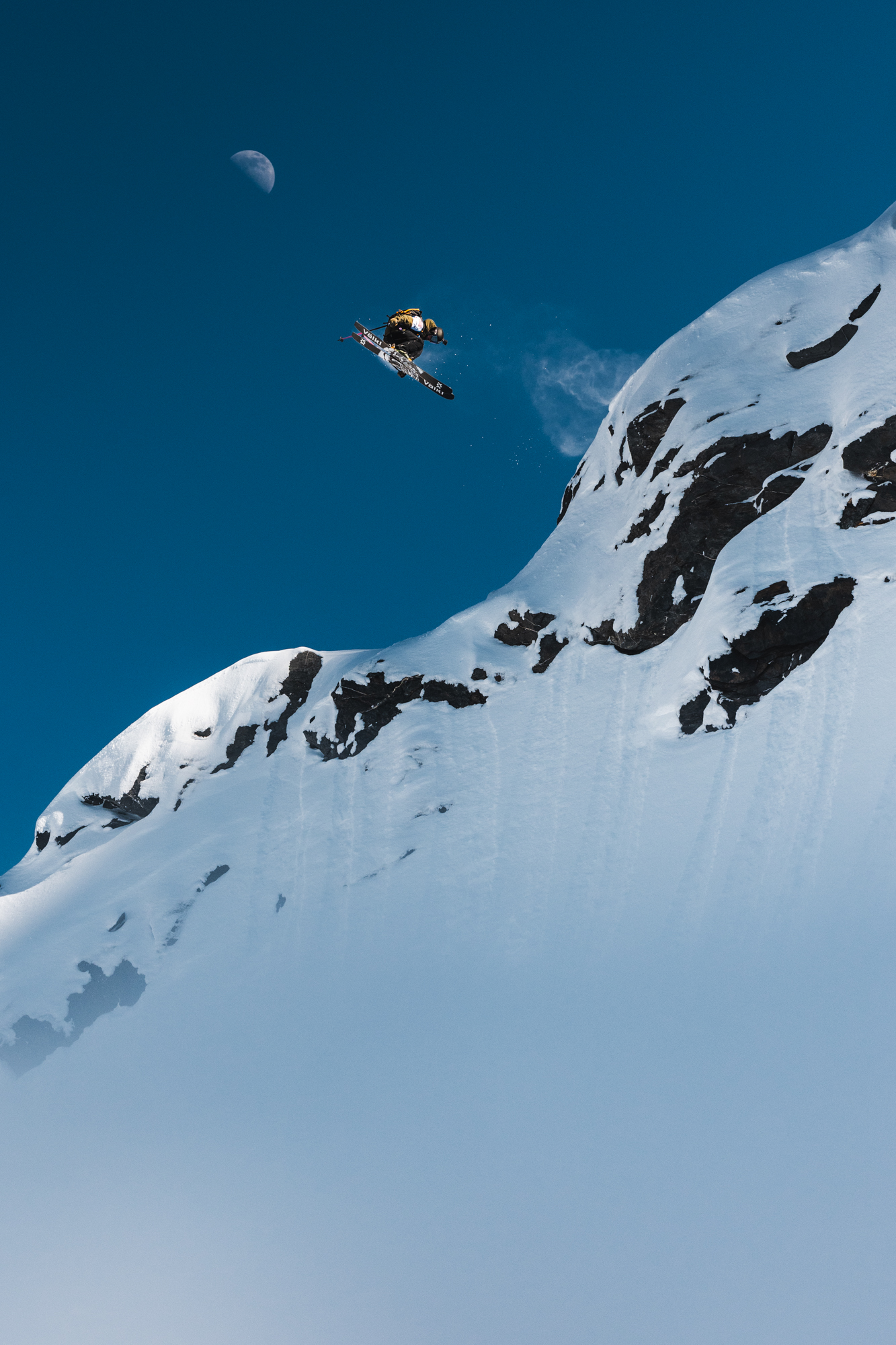
Joey Leonardo gets airborne.
Jeremy Bernard / FWT
Contrary to the first tour stop where three of the top four finishers had started early, the Val Thorens Pro was kind of a slow burner. Joey Leonardo hopped on the hot seat early and could comfortably sit there for a long time as one starter after another crashed somewhere on the course. The rookie had shown a run including a 360 and a backflip over cliffs in the top section and followed up with a big, clean 360 at the entrance to the lower steep section that claimed so many victims. Fellow American Ross Tester came close with a very similar performance and there is cause for debate whether Ross might have had an even better run as he cleared a double cliff with his 360 up top. Arguably he missed a backflip compared to Joey but only since he showed a substantially bigger air before which resulted in much higher speed at the landing—which Ross used to include a huge transfer air into his run. Both Ross and Joey had one slightly shaky landing and otherwise showed fluid, strong skiing.
A much bigger slip-up, at least in my opinion, was the score for Max Hitzig. The former tour champion, who had already placed fourth in Spain, came up with a unique approach at the top section much to the delight of the numerous spectators. On the popular traverse right from the starting gate, Max suddenly jumped over a small rock band onto a hanging snow field that ended in a huge cliff. He found a small chute that cut the mandatory drop a bit shorter, but it still was easily the biggest cliff tackled the whole day–and Max skied this very technical line extremely fluidly and stomped the landing of his massive drop perfectly. The German riding out of Austria cleared the lower section with a similar approach—skiing a technical line with amazing speed and confidence—but missed a freestyle trick in his run due to his line choice. In the end, the judges found Max’s run wasn’t good enough for the podium.
This podium was once again topped by Ben Richards who happened to be the last rider of the Ski Men’s. The kiwi followed the same line as his fellow podium finishers but he threw a big 360 at the top of the steep section where everyone else had opted for a double drop over two rock bands and followed up with a huge air clearing the whole bottom rock section in full control. At the lower section, he equally impressed with a lofty 360 to effortless landing at the drop that had proved lethal to so many of his competitors, seemingly hand-dragging along the way. The final steep, rock studded section also proved to be no problem for Ben who swiftly finished a run that was undoubtedly worth a FWT victory—albeit maybe still contested by Max Hitzig’s performance who had shown a different, yet still really impressive approach to skiing the venue of the Val Thorens Pro. Best check the replay on the FWT website to see for yourself which approach to freeride skiing you prefer—or simply enjoy these outstanding skiers at the top of their game!
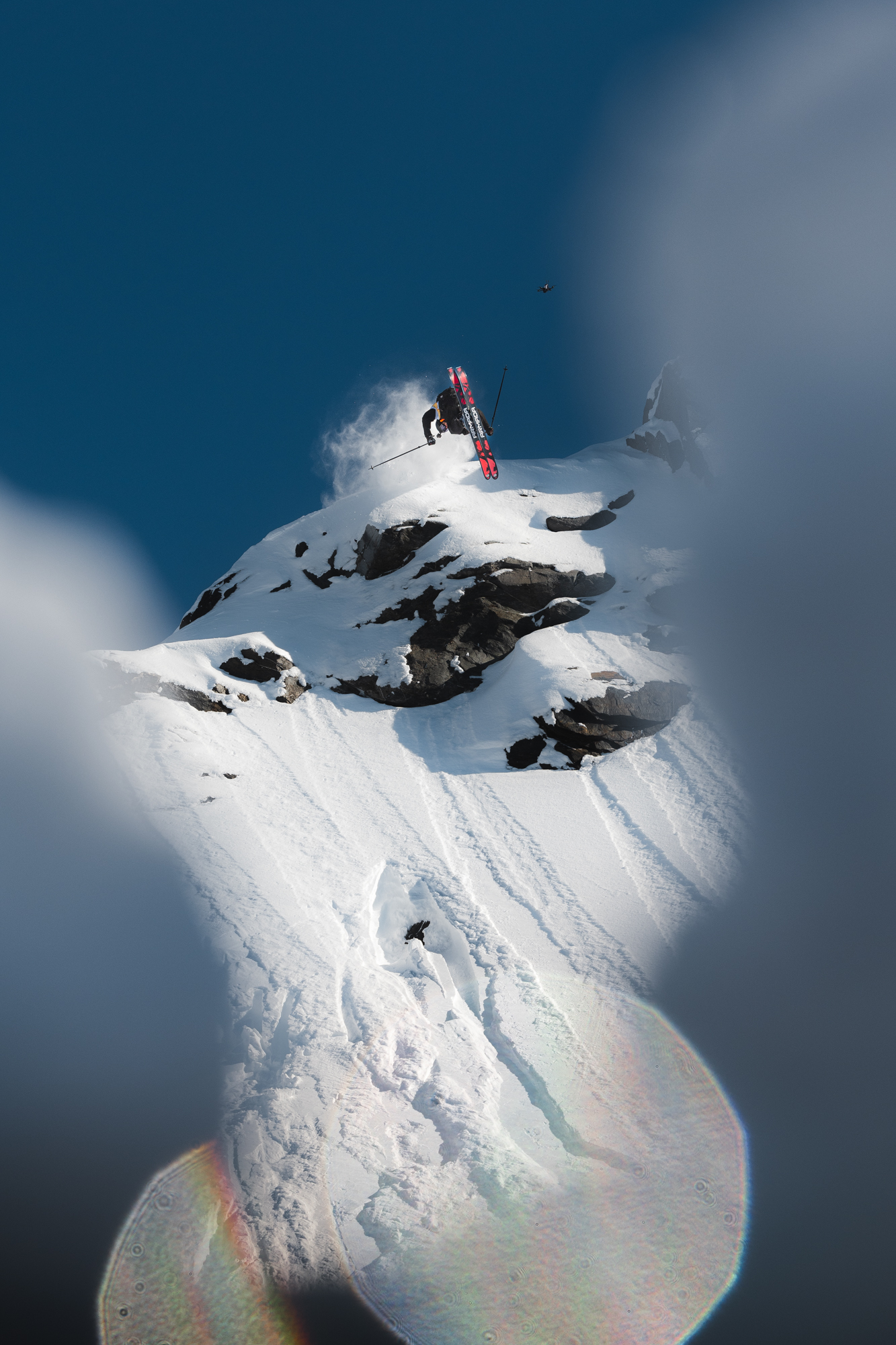
Ben Richards effortlessly spins a 360 at a drop that saw more skiers crash than land—mostly upon trying a backflip.
Jeremy Bernard / FWT
“I’m so happy. I took inspiration from Toby and Fynn, who dropped first, and they really helped confirm my line choice. I’m incredibly thankful to them and I can’t believe I won once again.”
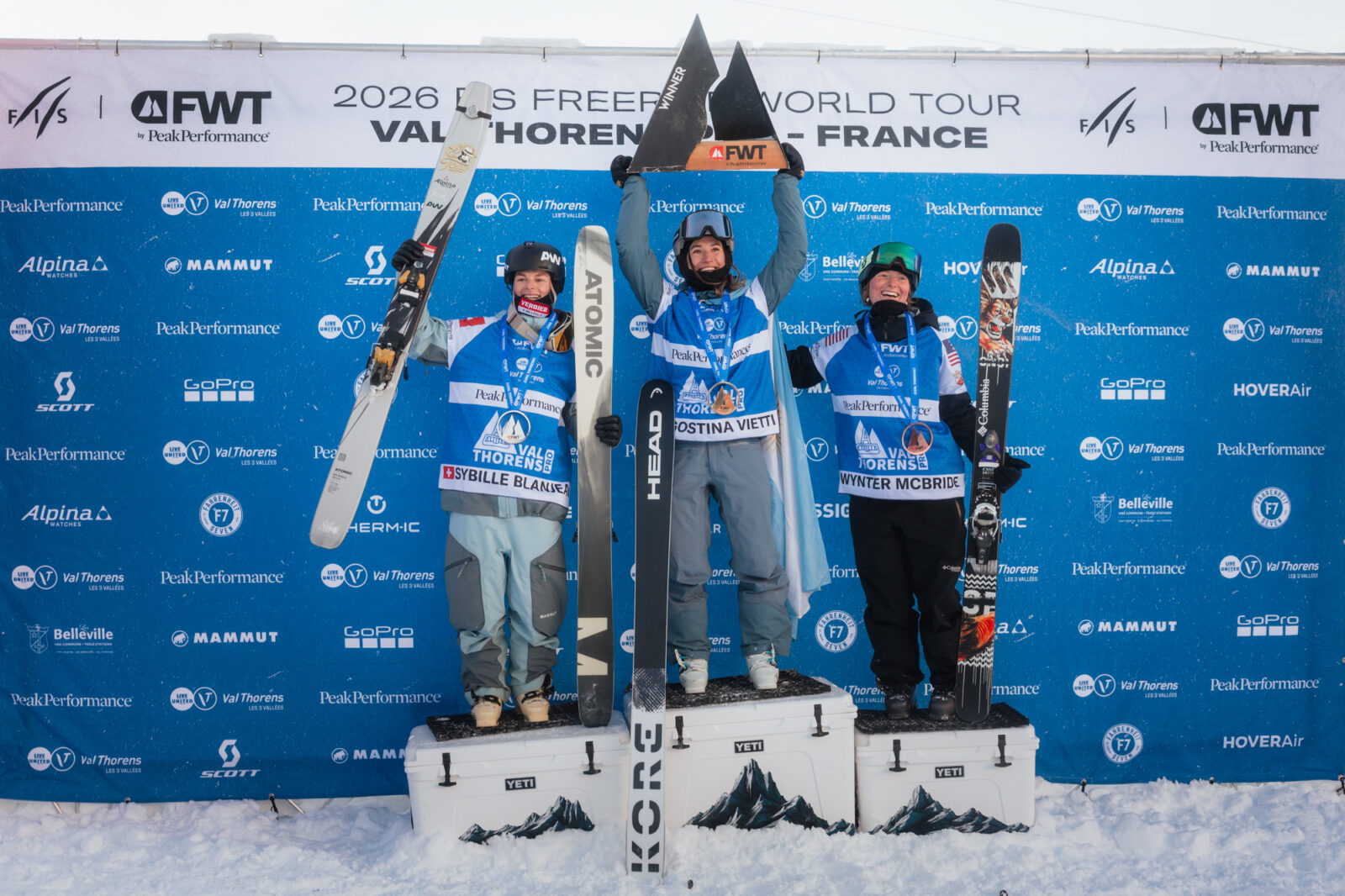
Ski Women’s Podium
Jeremy Bernard / FWT
Val Thorens Pro Results – Ski Women
| Place | Name | Country | Score |
|---|---|---|---|
| 1st | Agostina Vietti | ARG | 77.33 |
| 2nd | Sybille Blanjean | SUI | 74.33 |
| 3rd | Wynter McBride | USA | 72.00 |
| 4th | Zuzanna Witych | POL | 68.00 |
| 5th | Jenna Keller | SUI | 65.67 |
| 6th | Lou Barin | FRA | 65.33 |
| 7th | Zoé Delzoppo | FRA | 63.33 |
All results on freerideworldtour.com
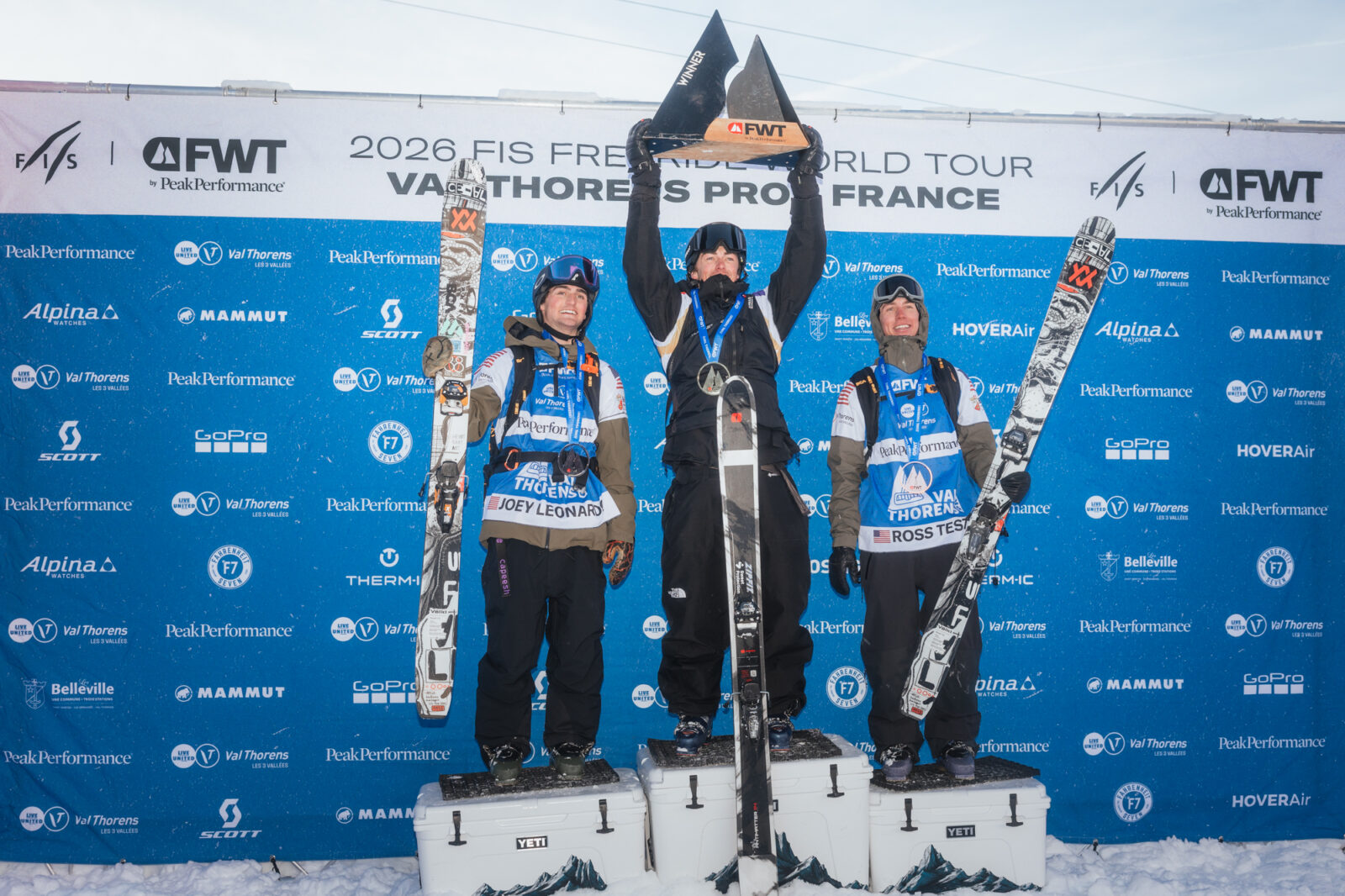
Ski Men’s Podium
Jeremy Bernard / FWT
Val Thorens Pro Results – Ski Men
| Place | Name | Country | Score |
|---|---|---|---|
| 1st | Benjamin James Richards | NZL | 92.00 |
| 2nd | Joey Leonardo | USA | 89.00 |
| 3rd | Ross Tester | USA | 84.33 |
| 4th | Max Hitzig | GER | 83.00 |
| 5th | Tiemo Rolshoven | GER | 80.67 |
| 6th | Victor Hale-Woods | SUI | 74.33 |
| 7th | Abel Moga | ESP | 71.67 |
| 8st | Ugo Troubat | FRA | 70.00 |
All results on freerideworldtour.com
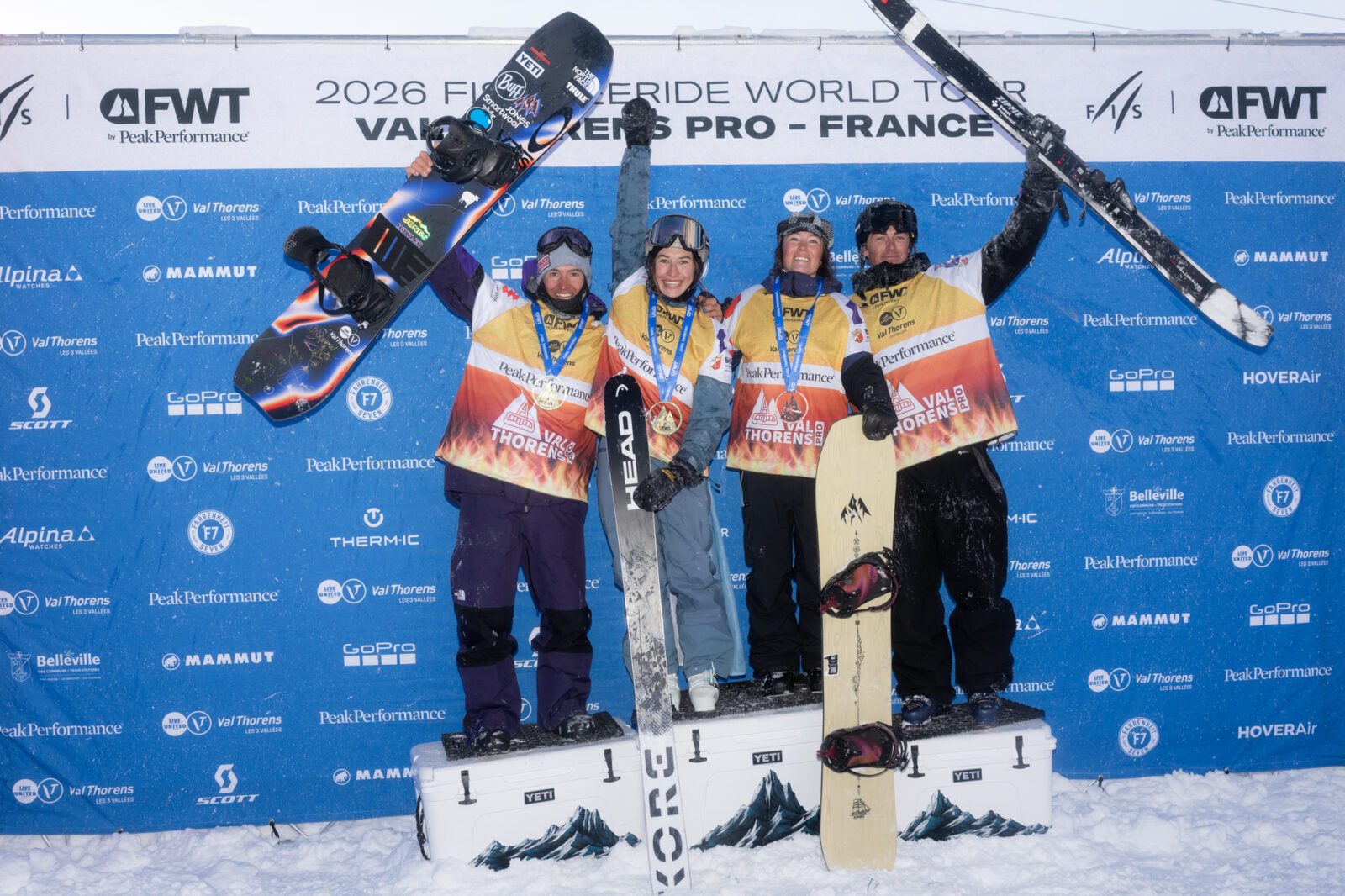
The golden bib holders after the second stop of the 2026 FWT (f.l.t.r.): Victor de le Rue, Agostina Vietti, Mia Jones and Ben Richards
Jeremy Bernard / FWT