The Slopestyle World Cup season came to a close on the sunny slopes of Corvatsch Silvaplanna as the Slopestyle Crystal Globes were decided. A huge season of contests, that climaxed in Livigino, has brought up many talking points around how slopestyle should be judged. There will be meetings over the off-season between riders, coaches, judges and some of the thinkers of the sport to decide what direction it takes over the next few years leading up to the next Olympics in France.
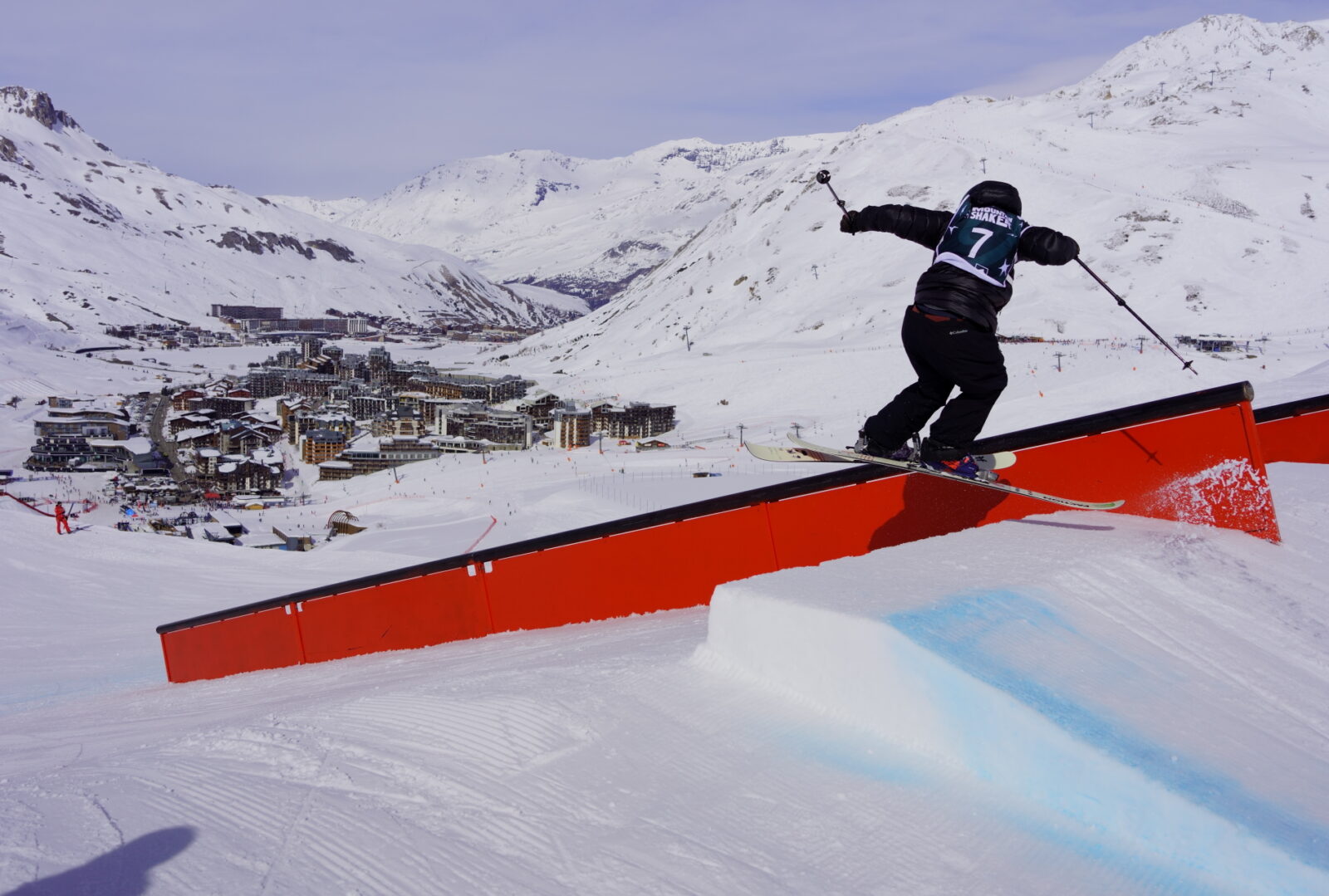
Sarah Hoefflin switch left lipslide 270 onto the down bar in Tignes last week.
Scott Naismith
Event News
Slopestyle final
View from the Booth: Sarah Hoefflin and Birk Ruud win the final Slopestyle World Cup in Silvaplanna
The course at Corvatsch consisted of four rails and three jumps and a roller, so riders had the opportunity to exhibit a huge amount of variety on both jumps and rails. As always, the main talking points surrounded the composition score: how it should be judged, what criteria to weight and how many take-off directions did riders squeeze into their runs?
The Women
Women’s qualifications went down early Saturday morning having been rescheduled due to the arctic blast that is currently hitting much of the alps. The clouds that brought the snow had gone, and the wind had died down just enough to allow the speed for the women to hit the jumps. With the qualifications out of the way, we rolled straight into finals.
Conditions were still tricky for the women, with the wind changing frequently. Guilia Tanno was the first brave enough to rip into a double cork 1080 safety on the second jump. Combined with a solid rail run including front and back 450 outs and left 270 on further down the course Giulia would finish third to take her second podium in as many weeks, solidifying her incredible comeback from a string of injuries that threw doubts on whether she would ever walk properly again, let alone ski.
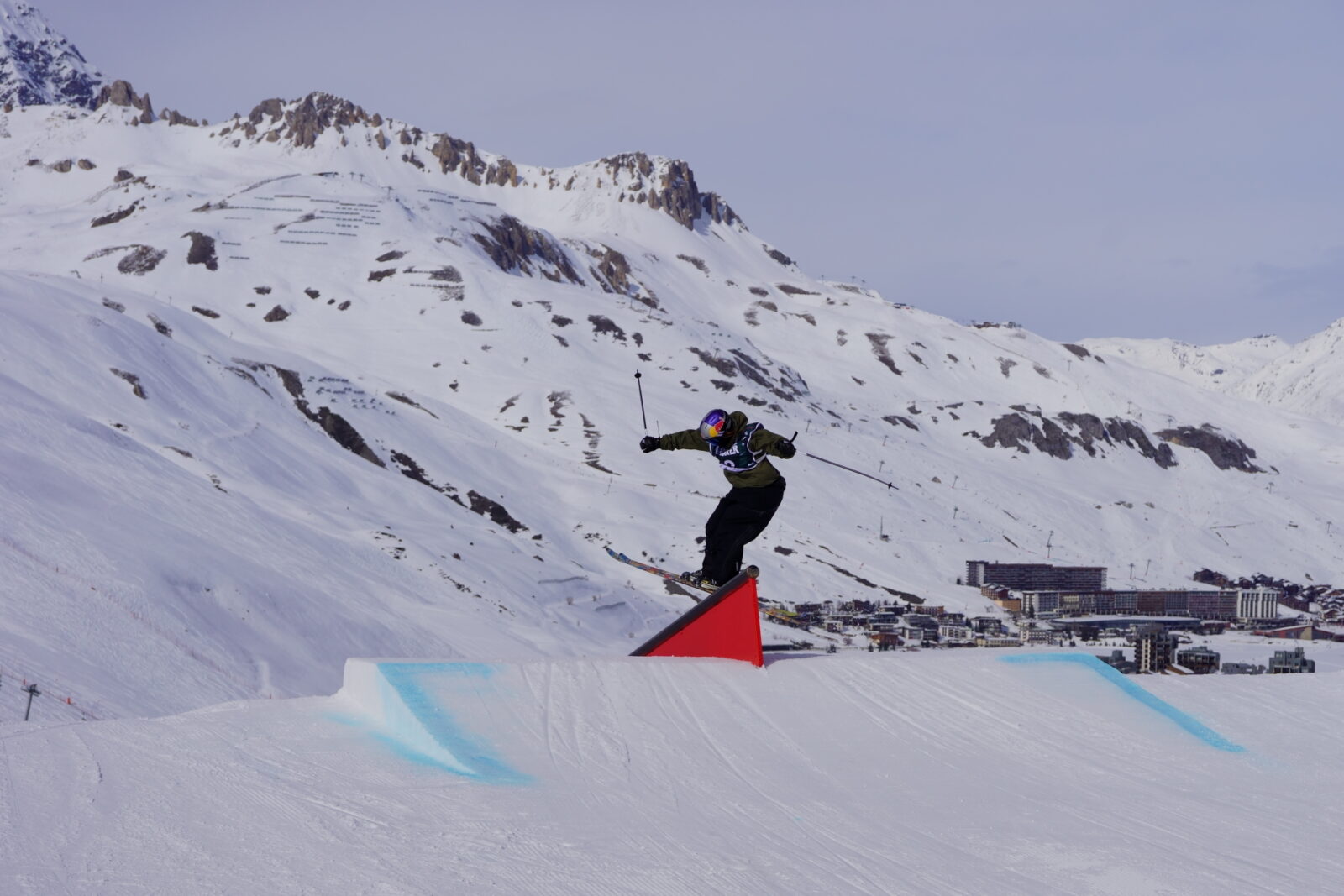
Kirsty Muir with a left 270 on in Tignes last week.
Scott Naismith
The battle for the top spots was between Kirsty Muir and Sarah Hoefflin. Having had a nightmarish season, Sarah finally put a run down in qualifications to make it into finals. Since repeatedly prereleasing, she has changed binding manufacturers, which has also brought a much-needed change in fortune.
Sarah would put any questions that she might be past it to bed with a run that reminded everyone of her permanent class. She starts with right foot back 270 and a right foot front 450 out on the top two rails, into a left double cork 1080 safety, right 540 mute, into her signature switch right double cork 1080 mute. On the roller she went switch left 360, swapping shoulders to spin switch right 270 onto the tube to switch, finishing with a switch left 270 on to switch. She had all take-off directions, two doubles and showed great switch skiing skills through the tricky course and was rewarded with first place that would hold for the first runs.
No one was able to better her score in the second runs but with Kirsty dropping last, who certainly has the firepower to overtake, Sarah needed to try and better her run. A gust of wind threw her off on the way into the first jump and she straight aired. It was a blessing for fans of the sport though as she proceeded to then carved into two beautiful cork 360s that had the judges booth erupting with appreciation.
Kirsty, sitting in second place, was the last to drop but immediately missed her switch on back 270 off the top rail, handing Sarah her first win in six years. Having had such a tough year, there is not a single person in freeskiing that isn’t happy to see Sarah overcome her self-doubt and return to the top step of the podium.
Slopestyle World Cup Silvaplanna Women's Results
| Place | Name | Country | Score |
|---|---|---|---|
| 1st | Sarah Hoefflin | SUI | 80.07 |
| 2nd | Kirsty Muir | GBR | 75.54 |
| 3rd | Giulia Tanno | SUI | 70.53 |
| 4th | Anni Karava | FIN | 61.38 |
| 5th | Lara Wolf | AUT | 60.22 |
All results on FIS.com

Women's Slopestyle World Cup Silvaplanna Highlights
FIS Freestyle Skiing Youtube
The Men
The men had fewer problems with the wind, but the knuckle of the first jump did get almost as much of a flogging as Jake Paul in his last bout, ending plenty of runs.
Mac Forehand would get himself some bronze coloured silverware with a run that included all four take-off directions on both the jumps and the rails. This is something the composition judges were keeping a close eye on with it being an eight feature course. Mac did come off the first rail ever-so-slightly early and his jumps were a little loose—his switch right double cork 1440 safety was super low, as he barely scraped over the knuckle and he toxiced a double cork 1620. His use of course was pretty insane though, giving the cameramen a hard time as he boosted from side-to-side through the course, nose buttering a 720 over the roller gap transfer and then disastering from the left hand side of the rail pad on a massive switch left lip transfer 270 pretzel 270.
The much-discussed Henry Sildaru secured another podium and second place with his clinical skiing. Like it or hate it, there is no arguing that Henry’s style is as clean as the white t-shirt at the end of a Vanish advert. Henry’s ability to perform some of the hardest tricks and execute them perfectly is astonishing. His left double cork 1620 blunt is a thing of beauty and if he holds the grab any longer he’s going to lose fingers.
Henry is also able to slightly game the SBS system by maxing out his section scores with crazy tricks. This allows him to make up for what he lacks in variety. Henry is missing the bio axis throughout his run, something the judges (and riders) value highly. It is also argued that his forward left 1620 blunt and his switch left double cork 1800 blunt are extremely similar tricks with the same grab. Just like in Tignes, Henry “won” on the section scores but was held back by his significantly lower composition score.
This left room for the dominant force in slopestyle, Birk Ruud to take yet another World Cup win and secure himself the Slopestyle Crystal Globe. The run had everything in terms of variety—except for a bio on the jumps. He kicks off his run with a switch right 270 continuing front 810 out, a left 270 continuing front bio 810 japan, into a left nose butter double cork 1260 safety, to a switch right double cork 1440 safety, to a switch left double cork 1620 blunt, he then slung a right misty 540 japan over the roller straight into a switch left 270 back swap to forward, finishing with a right tokyo drift lip 270 continuing front 270 out.
The run wasn’t without its small faults but on a day that saw a lot of small errors with the guys going super hard it was the clear winner.
A special mention needs to go to the retiring Fabian Boesch who once again, and for the last time of asking, made it into finals. He stomped his first run which included a switch right double misty 1260 reverse mute that he somehow tweaked all the way behind his head, staring death in the face, forcing a couple of excitable judges out their chairs.
The combination of a home World Cup, the retirement of both Fabian and Colin Willi, and the double podium from the women’s side meant much of Switzerland took over the apres bar at the top of the Corvatsch gondola to celebrate. The celebrations lasted long into the night, as in drips and drabs Swiss riders and Swiss Ski staff either crawled or were carried back through the hotel lobby while the judges enjoyed some beers at the hotel bar.
This being the final slopestyle of the season the Crystal Globes were handed out to overall winners Kirtsy Muir and Birk Rudd and put the seal on this Olympic cycle. There has been much discussion about the future of slopestyle judging and there are going to be meetings with those involved over the off-season to discuss the future direction of the sport. We will address some of the issues being discussed in an upcoming article.
Slopestyle World Cup Silvaplanna Men's Result
| Place | Name | Country | Score |
|---|---|---|---|
| 1st | Birk Ruud | NOR | 83.52 |
| 2nd | Henry Sildaru | EST | 79.41 |
| 3rd | Mac Forehand | USA | 78.47 |
| 4th | Hunter Henderson | USA | 75.70 |
| 5th | Gian Andri Bolinger | SUI | 72.02 |
All results on FIS.com

Men's Slopestyle World Cup Silvaplanna Highlights
FIS Freestyle Skiing Youtube