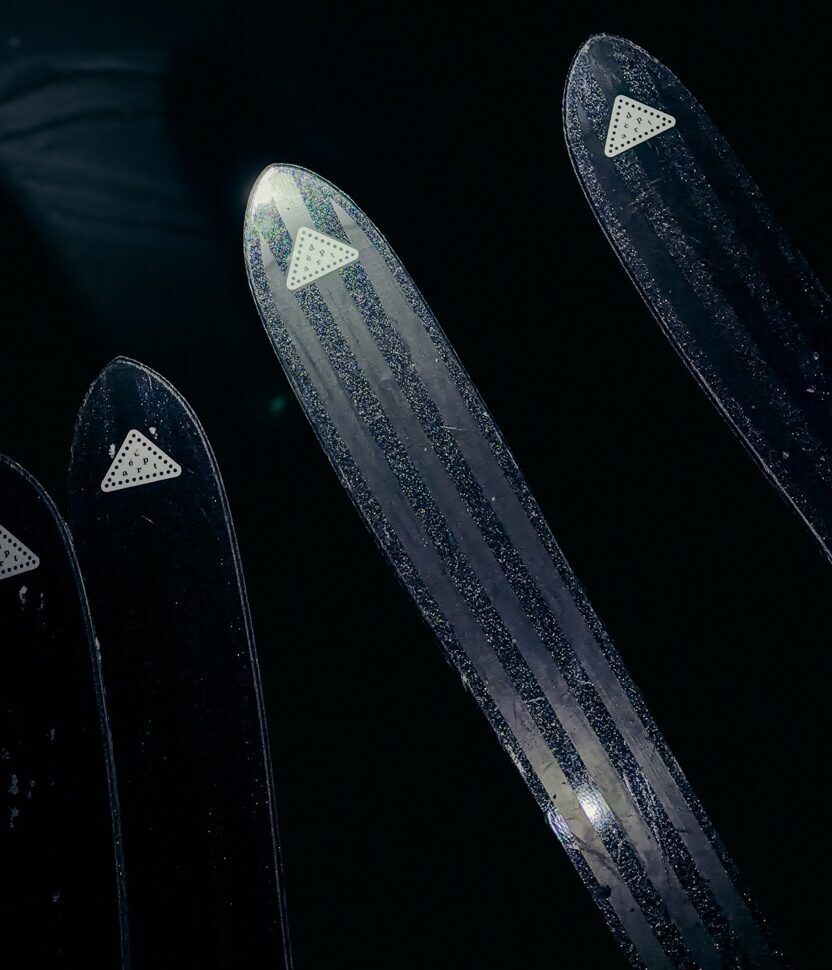
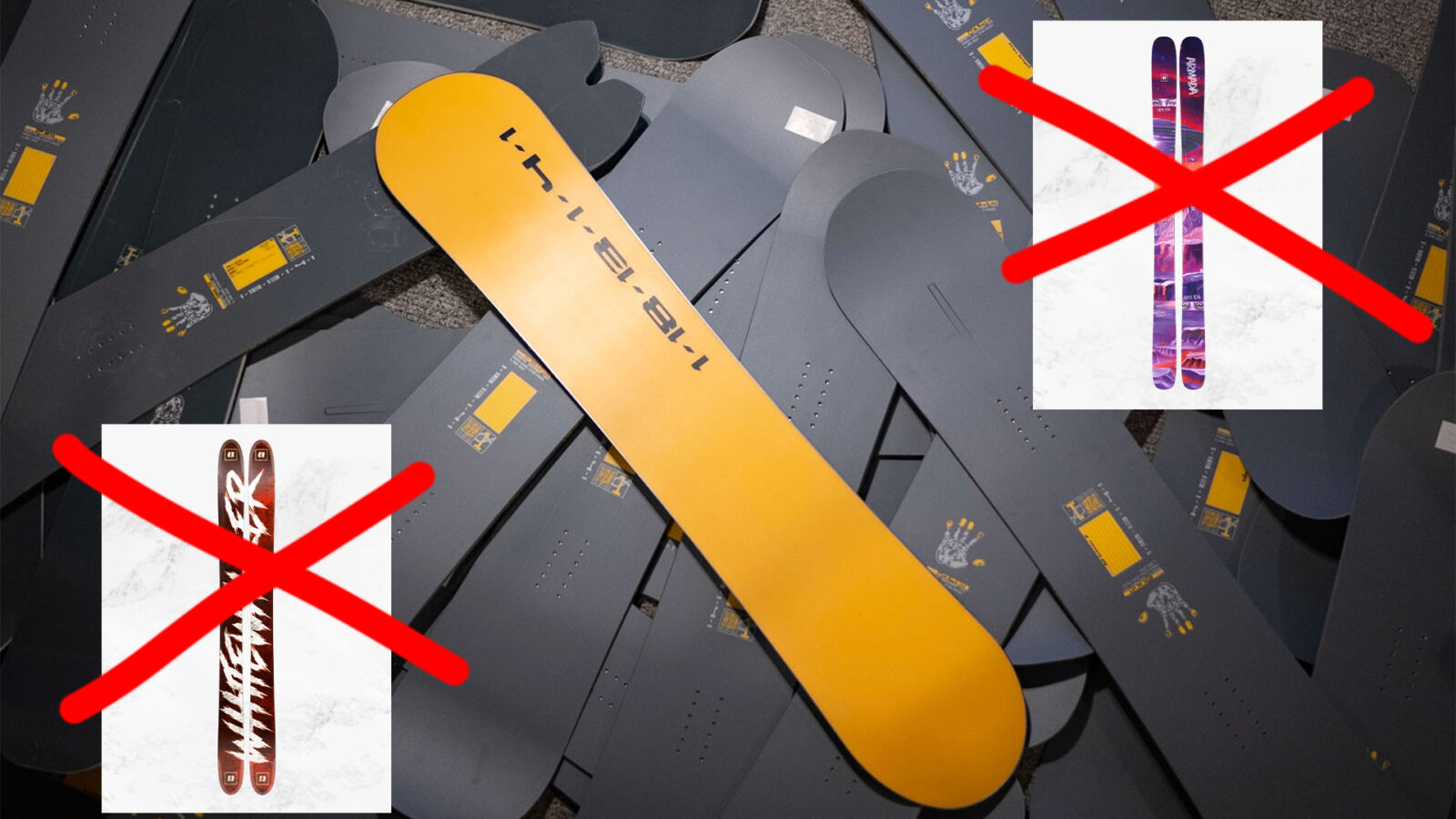
Generally, the goal was to make a ski that looks different to most traditional, or what is now traditional, freestyle skis. When I started freeskiing, in the early 2000s, when you saw somebody on the mountain with twin tip skis, you were like, “Oh, you are my friend because you have that type of skis.”
Nowadays in the snowpark, it didn’t really feel like that for me anymore. There’s a lot of people who are doing a “professional sport” with twin tip skis, which was never really freeskiing for me. I feel like extreme sports like skiing, skateboarding, surfing, whatever it is, are for the people who don’t function in real professional sports.
Having that different ski shape, when you see someone on the mountain or in the park, you can recognise that you would vibe with them. You’re making friends quickly and easily, whether that be a Depart or a Simply or a Season.
You can spot someone and associate what they’re riding with a brand of skiing.
And it’s not just a twin tip ski with a little logo on it—it actually has a different silhouette. That’s the same with what twin tips represented for me in the early 2000s. From a mile away, you could see that the person’s skis were bent up at the back and you would be friends.